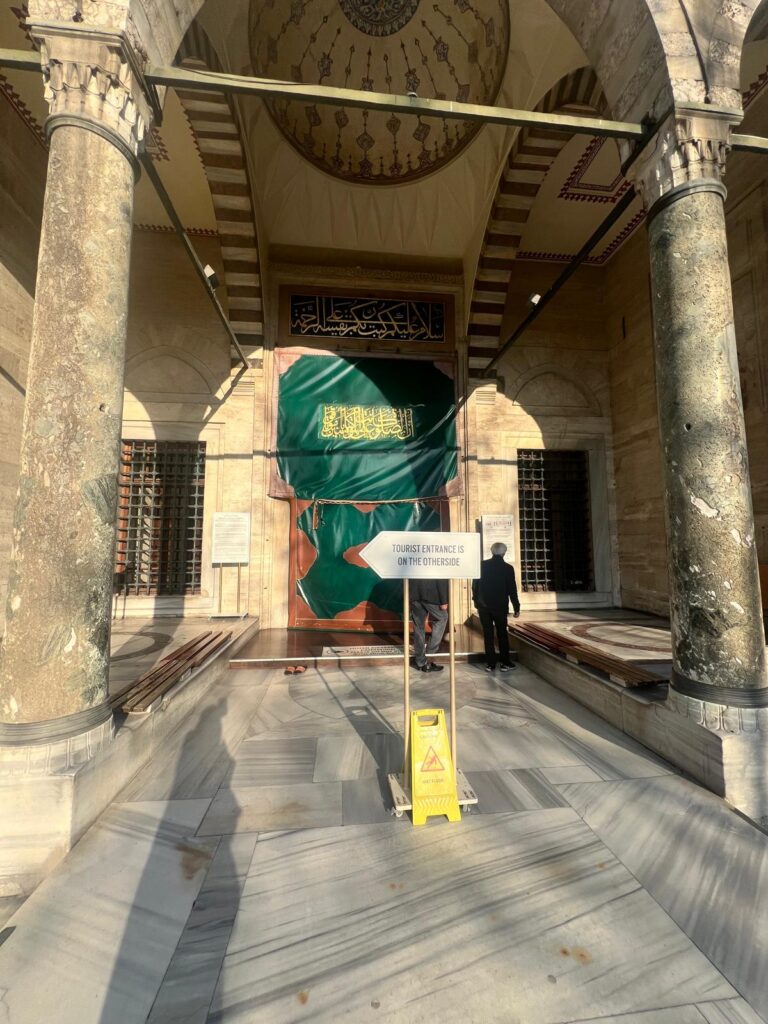
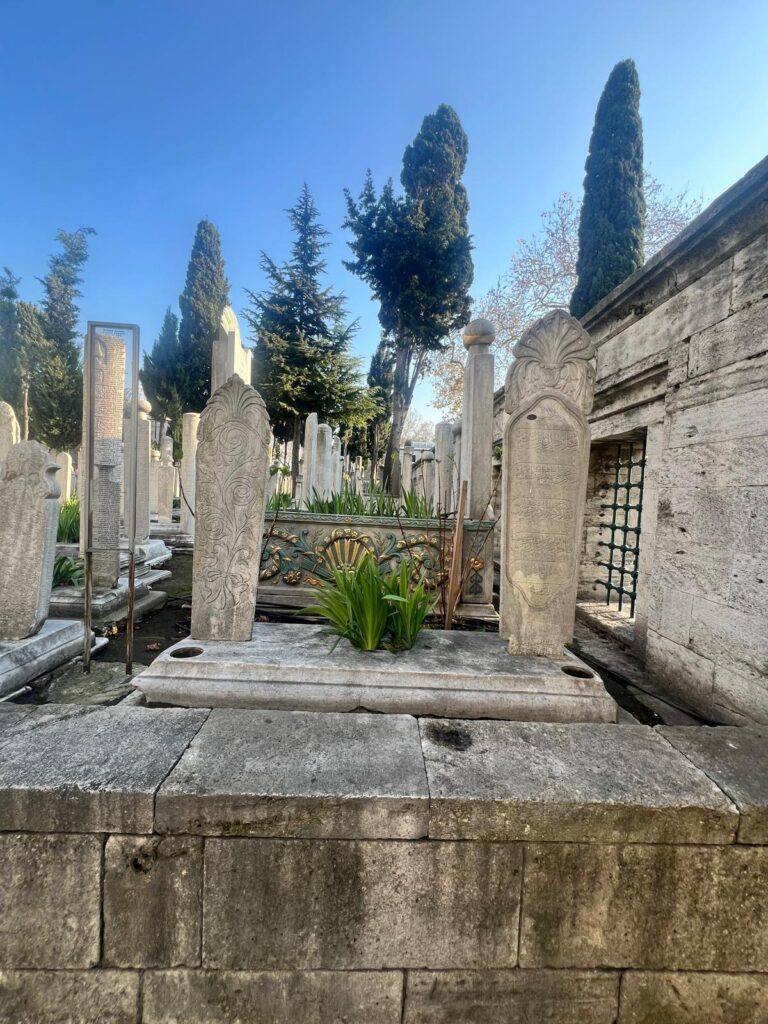
There is an old Istanbul saying:
“If you want to understand the Ottomans, don’t look at their palaces.
Sit quietly in the Süleymaniye.”
Because the mosque doesn’t impress by shouting.
It persuades by order.
And that may be its most radical achievement.
High above Istanbul, where the Golden Horn meets the Bosphorus, a silhouette rises to command the skyline. This is the Süleymaniye Mosque, an Ottoman masterpiece that does not just decorate the city it defines its spirit. More than a building, it is an experience in stone, light, and silence, built as a timeless argument for harmony.
The Crown of Istanbul
From the bustling streets of historic Istanbul, the Süleymaniye Mosque stands with quiet authority. Its domes and minarets do not shoutthey preside. Built in the 16th century for Sultan Suleiman the Magnificent by the legendary architect Mimar Sinan, this was more than a mosque; it was a declaration of order, confidence, and divine purpose.
But the Süleymaniye is not frozen in history. It remains a living sanctuary where imperial ambition meets human need. It is a spiritual center, an engineering marvel, a social welfare complex, and perhaps most compelling today—a space of profound psychological healing.
In this article, we explore its layers:
How it embodies Islamic faith through revolutionary acoustics and serene design.
Why it marked the peak of the Ottoman Empire.
The philosophy behind its architecture of light and balance.
How its very structure offers calm and clarity to the modern, seeking soul.
Join us in uncovering why the Süleymaniye is not just a relic of Istanbul’s past, but a timeless source of power, harmony, and healing.
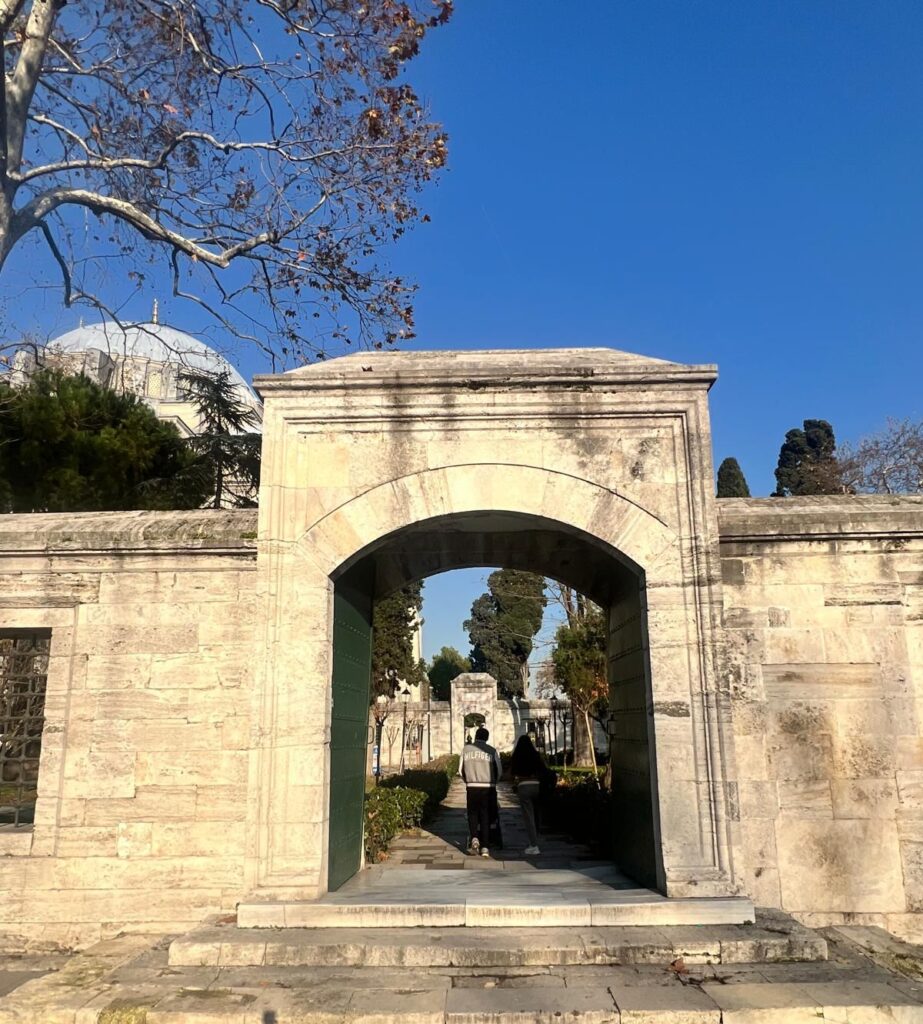
Pillar of the Islamic Faith: Maintaining Religion in the Ottoman Context
A. A Cami for the Ummah
At its core, the Süleymaniye Mosque is a Jami‘ mosque, a space built for the vital Friday congregational prayer. Its vast, unified hall aligns thousands of worshippers toward Mecca in a single, uninterrupted sweep, dissolving social hierarchy and reinforcing communal identity.
Every essential Islamic architectural element is present and masterfully refined:
The precisely oriented mihrab (prayer niche).
The elevated minbar (pulpit) for the sermon.
A spatial purity where architecture serves devotion, not spectacle.
B. A Theological and Educational Nucleus
The mosque was never an isolated monument. It anchors a comprehensive külliye (social complex), which included:
Four madrasas (theological schools)
A medical school and hospice
A library, soup kitchen, and public baths
This made the Süleymaniye a dynamic center of Sunni Islamic orthodoxy under the Ottoman Caliphate, nurturing scholars, jurists, and physicians. Here, faith was inseparable from education and social welfare, actively institutionalizing religion for a thriving society.
C. Acoustic Spirituality: The Revolutionary Sound of Worship
While many imperial mosques, like Istanbul’s famed Blue Mosque, are designed to stun the eye, the Süleymaniye Mosque was engineered to govern the ear. It stands as history’s first major mosque conceived as a precision acoustic instrument.
Architecture as Sonic Justice
Mimar Sinan’s revolutionary design used science to serve spirituality. The grand central dome acts as a perfect resonance chamber, while dozens of embedded terracotta pots absorb excess bass and amplify vocal clarity. This ensured the Imam’s voice—carrying the divine word and law—reached every corner with perfect intelligibility.
The Sound of a Lawgiver
This was not merely technical mastery; it was philosophical intent. Sultan Süleyman’s defining title was Kanuni—The Lawgiver. In the Süleymaniye, justice becomes auditory: the sacred word was delivered with equal clarity to the grand vizier in front and the laborer in the back row. It created an “Acoustic Caliphate,” a sonic democracy where architecture ensured no ear was excluded.
Here, power was not just seen—it was universally heard, making the spiritual experience equally accessible to all.
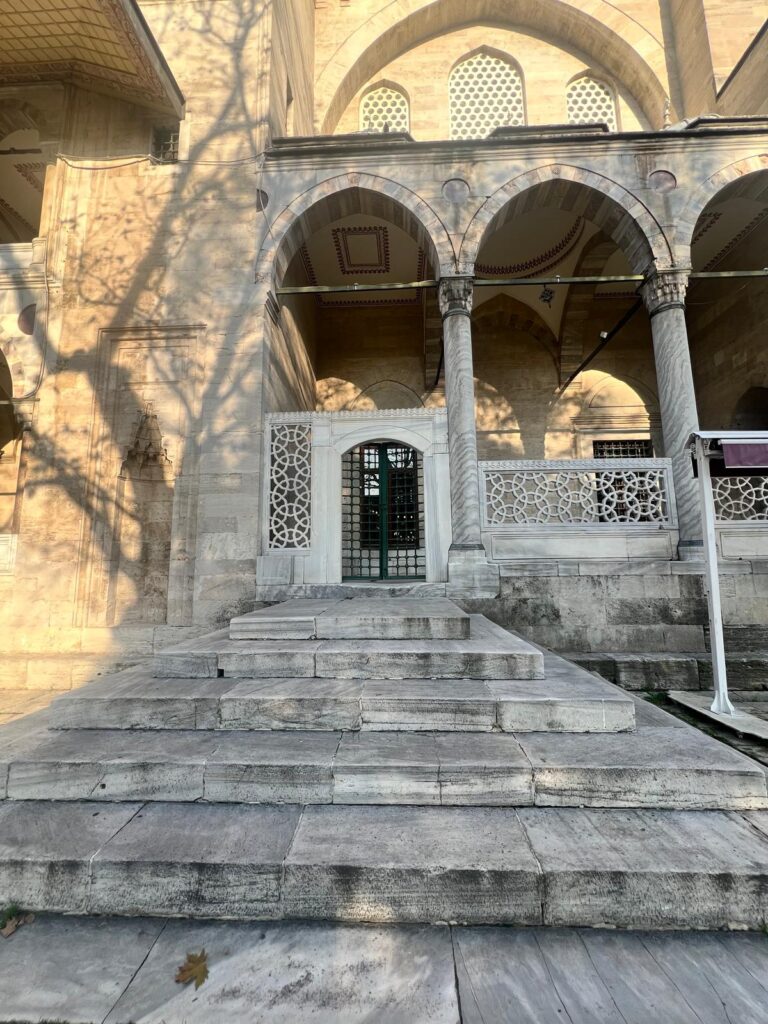
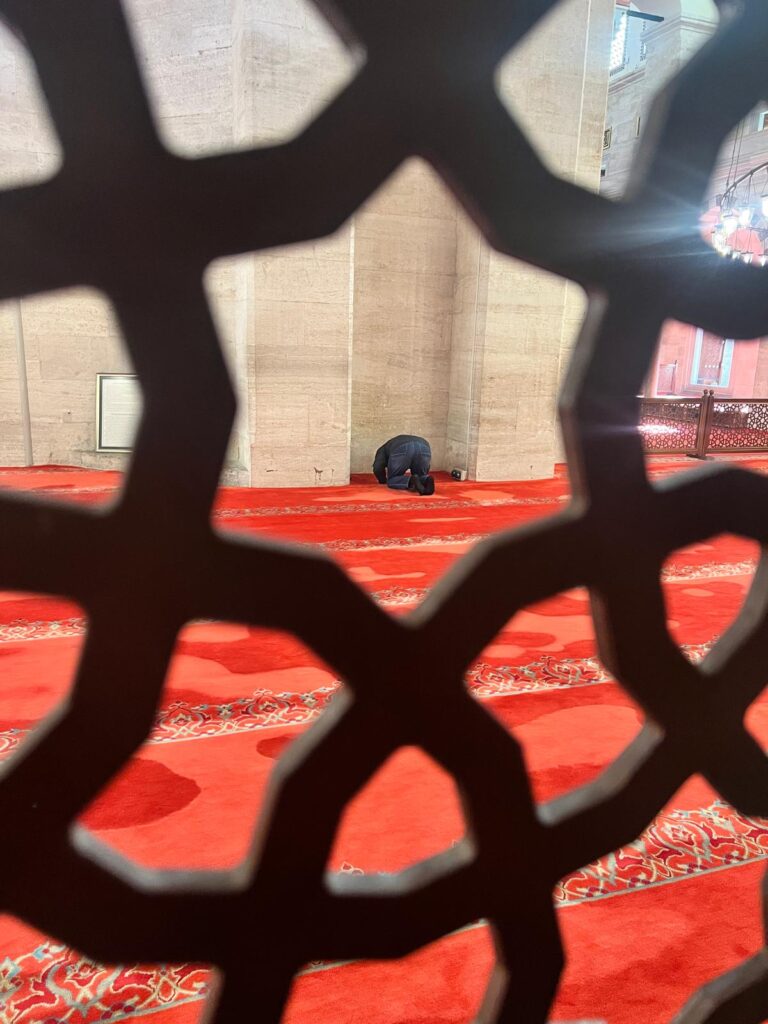
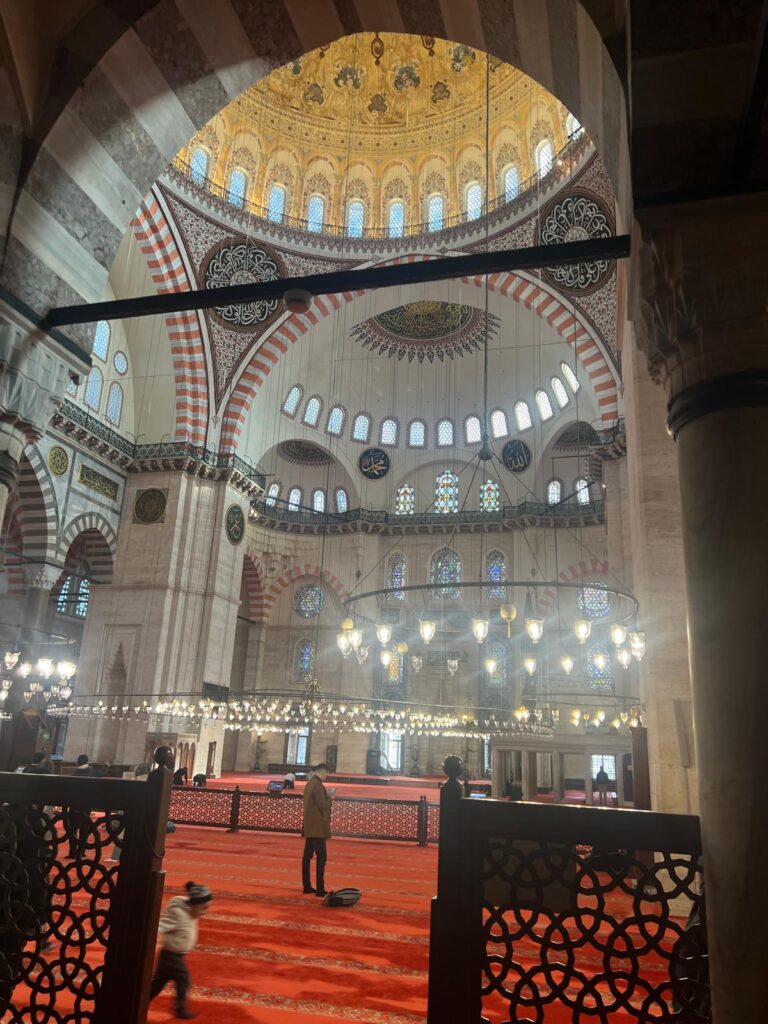
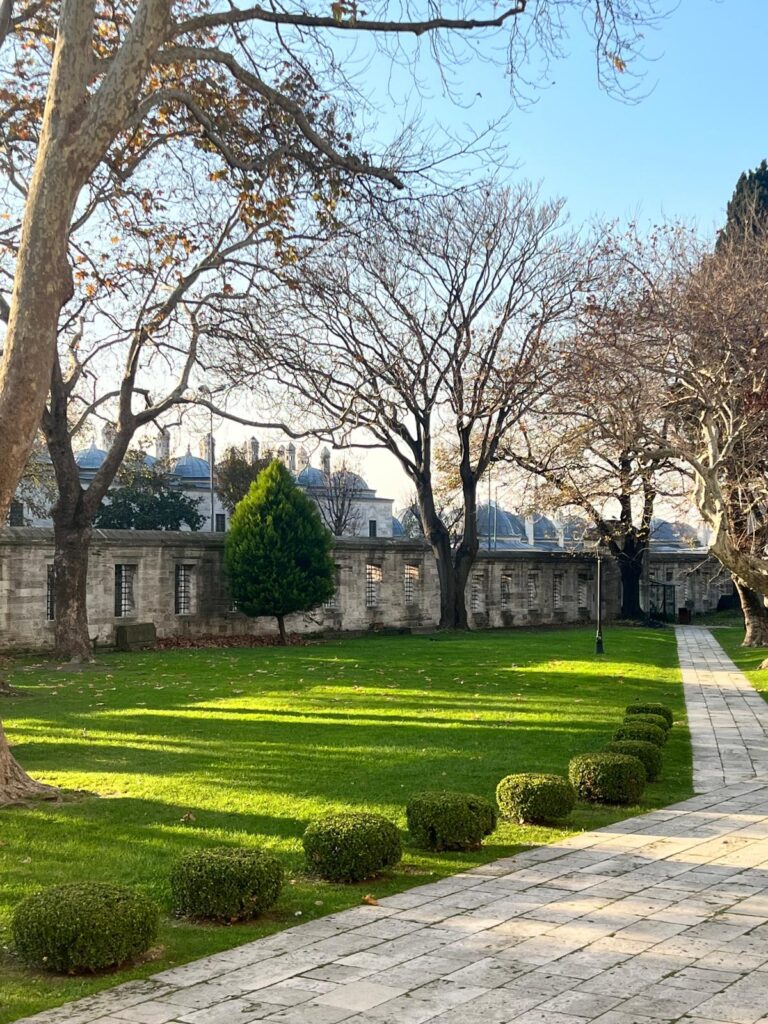
In both stone and spirit, Süleymaniye demonstrates that true resilience isn’t about remaining rigid but about learning to move, adapt, and endure together. Sinan’s masterpiece stands today not only as a monument of faith, but as a testament to human ingenuity’s power to create spaces that heal long after the ground has stilled.
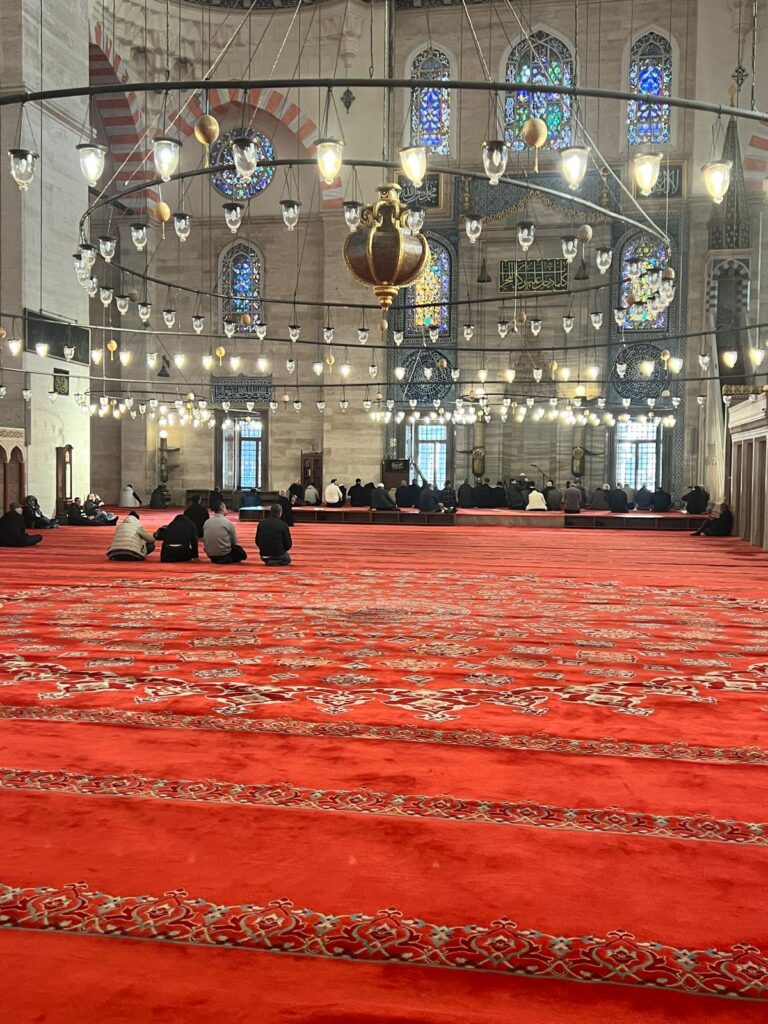
The Invisible Ventilation: How Sinan’s 16th-Century Design Purified Air and Spirit :
Long before sustainable architecture or green building design became modern movements, the Ottoman master architect Mimar Sinan engineered a passive ventilation system in the Süleymaniye Mosque that kept the air clean—using only physics and genius.
The Natural Airflow System: A Masterclass in Passive Design
Sinan’s system required no fans, no motors, and no electricity. It was a perfectly integrated natural HVAC system, working through deliberate architectural choices.
How the “Invisible Ventilation” Worked:
Strategic Low-Level Intakes
Hidden openings near the mosque’s base often at ground level or through grilles allowed fresh outdoor air to enter continuously. These were carefully positioned away from dust and pollution sources.The Heat-Driven Engine: Hundreds of Oil Lamps
The lamps were not just for light; they were the system’s thermal engine. As they burned, they warmed the air, causing it to rise naturally toward the vast central dome a process known as stack effect ventilation or thermal buoyancy.Hidden Chimney Corridors
Within the thick walls and structural cavities, Sinan designed concealed vertical channels that acted like chimneys. Smoke, soot, and stale air were drawn into these narrow passages and funneled upward.The Dome as an Exhaust Vent
At the top of the dome, discreet ventilation openings allowed the trapped warm air, smoke, and impurities to escape outside. This created constant negative pressure, pulling fresh air in from below in a continuous cycle.Air Washing and Circulation
The incoming air often passed through shaded, stone-lined entry channels, which cooled and slightly filtered it before it entered the main prayer space. The large interior volume prevented stagnation, ensuring gentle, whole-space airflow.
Result:
Even with hundreds of oil lamps burning simultaneously during ceremonies, the interior remained remarkably free of smoke and stuffiness, staying breathable and clear—a feat that astonished visitors and worshippers alike.
Why This Is Architecturally Impressive
Fully Passive Operation: No mechanical intervention was ever needed. The system runs on natural thermodynamics.
No Later Modification: Unlike many historical buildings retrofitted with modern systems, this was original to Sinan’s 16th-century design.
It Still Works Today: Centuries later, the principles continue to function, a testament to timeless sustainable design.
Symbolic Reading: Architectural Tazkiyah (Purification)
Ottoman thinkers and mystics saw this system as more than engineering it was physical metaphor. The term tazkiyah in Islamic spirituality means purification of the self, cleansing the heart of spiritual impurities.
Sinan’s ventilation performed tazkiyah of space:
Purifying the Air: Removing smoke and stagnation.
Purifying the Presence: Creating an atmosphere conducive to focus, prayer, and clarity.
Symbolic Harmony: The building itself “breathed,” mirroring the worshipper’s inner aim—to release worldly preoccupations (like smoke) and draw in the fresh air of spiritual presence.
In this way, the mosque wasn’t just a container for people, but an active participant in the spiritual experience, embodying the very process of purification that those within sought for their souls.
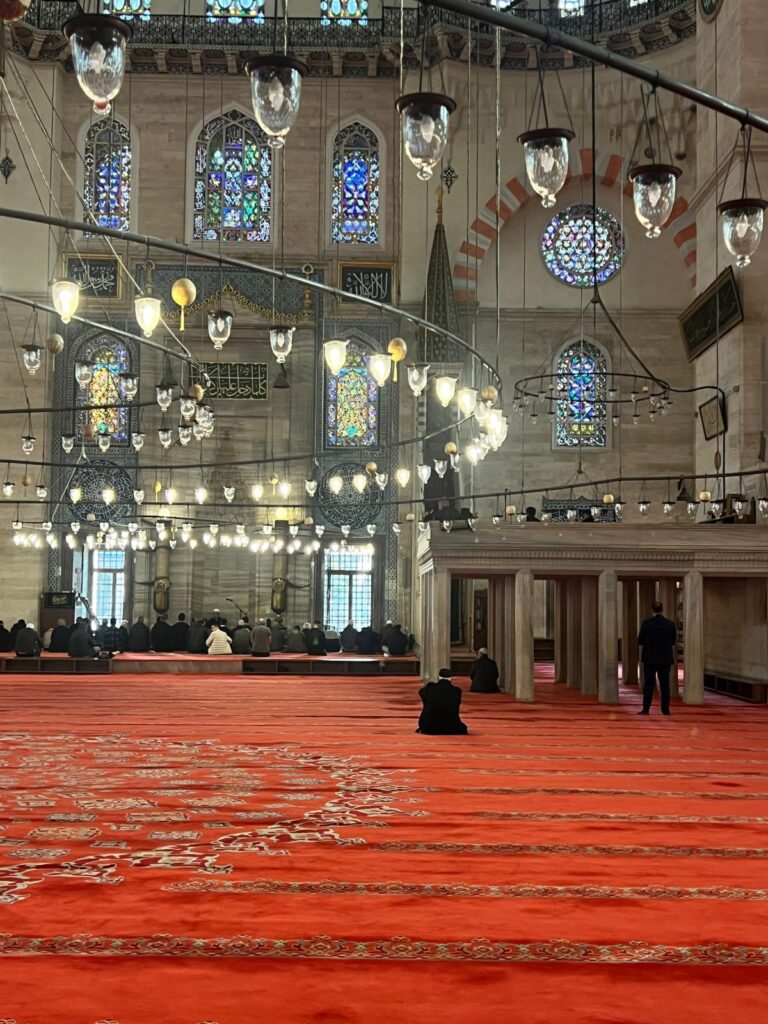
A Sanctuary for the Wounded Soul: The Architecture of Healing
For the modern visitor carrying the weight of stress or trauma, the Süleymaniye Mosque offers more than historical insight it provides a profound, multi-sensory environment for psychological restoration. Its design functions as a form of non-verbal therapy, addressing core needs for safety, order, and peace.
A. Architectural Psychology: The Blueprint for Inner Order .
Trauma and anxiety often manifest as internal chaos. The Süleymaniye’s design is its antidote. Its overwhelming symmetry, geometric clarity, and perfect proportional harmony provide a visual and psychological framework of predictable, reliable order. The space acts as a “holding environment”—vast enough to liberate the spirit, yet clearly defined and enclosed to create a powerful sense of safety and containment. This external order can help calm a disordered internal state.
B. Sensory Grounding and Integration.
The mosque expertly moderates sensory input, crucial for those prone to overload:
Acoustic Comfort: The legendary sound-absorbing acoustics, created by the embedded terracotta pots, soften all noise into a soft hum. This reduces auditory stress and creates a buffer from the external world.
Visual Tranquility: The filtered, diffused light from 128 windows eliminates harsh shadows and glare. This “visual calm” reduces eye strain and fosters a focused, present-moment awareness akin to architectural mindfulness.
Tactile & Olfactory Grounding: The prevalence of natural materials—cool stone, aged wood, the scent of clean air—and the presence of water in the ablution fountains provide neutral, grounding sensory experiences that anchor the visitor in the here and now.
C. Transcendence and Perspective: Grounding Through Grandeur.
The architecture guides a gentle psychological journey. The sheer scale invites an upward gaze toward the dome, a physical act that can metaphorically lift perspective away from personal distress toward something greater. Crucially, this transcendence is not alienating; the encompassing harmony of the space prevents feelings of dissociation. It offers containment, not escapism—modeling the internal balance (mizan) sought in trauma recovery.
D. A Legacy of Holistic Healing: The Darüşşifa Tradition.
This therapeutic function is deeply rooted in history. The mosque’s original darüşşifa (hospital), part of the külliye, pioneered early integrative medicine. It treated ailments of the mind and body using music therapy, the sound of flowing water, and fragrant scents recognizing healing as a sensory and spiritual process.
Thus, the Süleymaniye stands as a timeless blueprint for holistic healing. If trauma fractures one’s personal narrative, the mosque offers a silent, powerful story of integration, balance, and serene resilience. It demonstrates that true sanctuary addresses the individual not just as a soul, but as a nervous system, providing a space where one can begin to rebuild from a foundation of profound peace.