

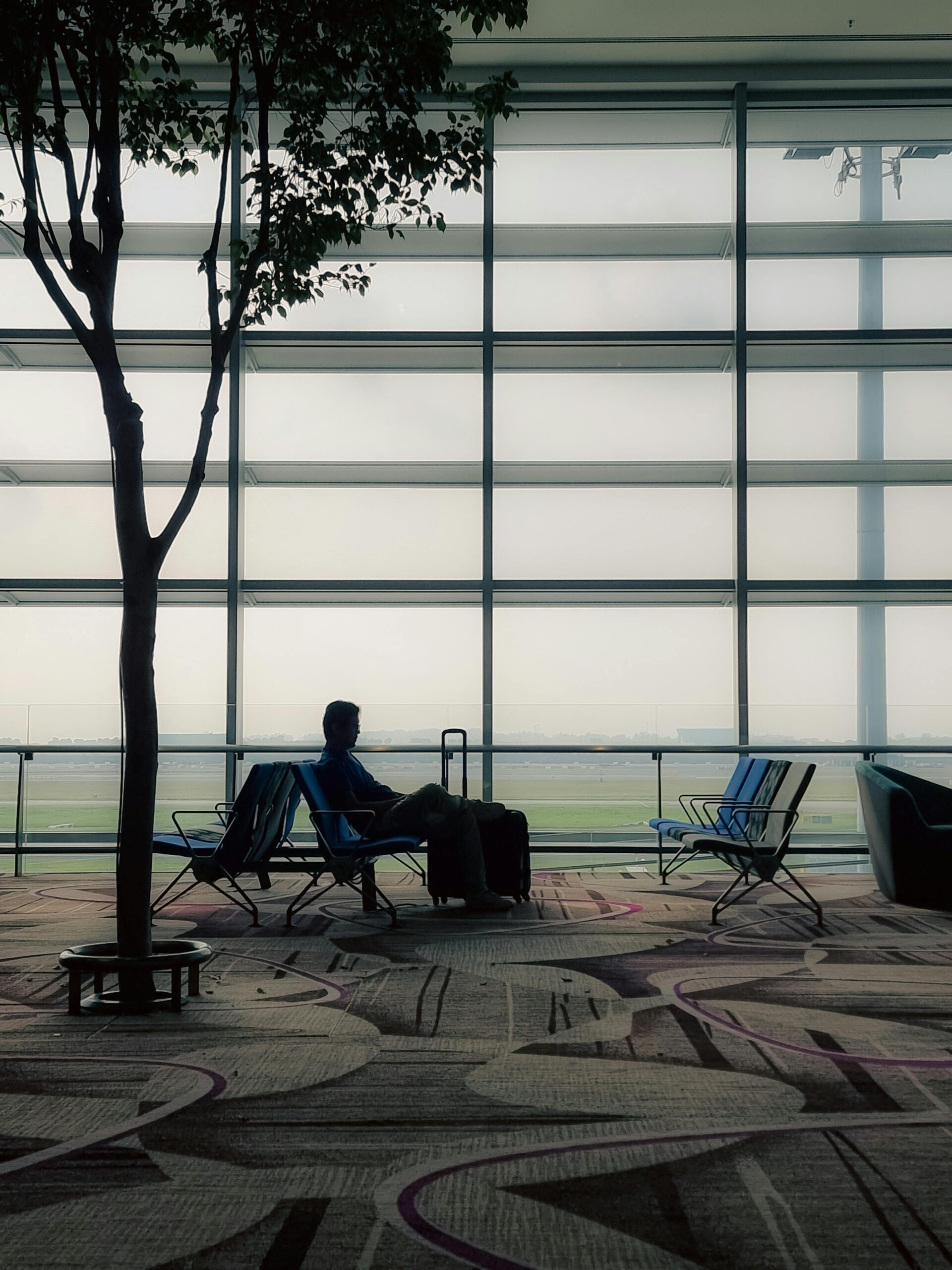

A trauma-informed, sensory-aware travel blueprint for reclaiming safety in the world’s most overwhelming environment.
Introduction: Why Airports Trigger Trauma Responses
- The Sensory Overload–Trauma Connection
- How Traditional Travel Advice Fails Sensitive Nervous Systems
- My Personal Breakthrough: From Panic Attacks to Peaceful Transitions in Turkish Airports
Part 1: The Pre-Airport Preparation Strategy
- The 24-Hour Buffer Zone
- Sensory Reduction Protocol
- The “Calm Container” Emergency Regulation Kit
- Digital Preparation for Real-World Calm
- Trauma-Informed Packing Strategy
Part 2: The Sensory Navigation System
- Mapping Your Airport Experience
- Visual Overload Management
- Auditory Regulation Protocol
- Tactile Grounding Techniques
- Türkiye Airport-Specific Guide
Part 3: The Human Interaction Framework
- Strategic Communication Tools
- Security Checkpoint Preparation
- The “Airport Angel” Support Strategy
Part 4: Real-Time Regulation Techniques
- The Panic Attack Interruption Protocol
- The Quiet Zone Network
- Movement as Emotional Regulation
Part 5: The Boarding Bridge Transition
- Navigating the Final Hurdle: Jetway Anxiety
- Seat Selection Science for Trauma Survivors
- In-Flight Sensory Safety Plan
Part 6: Arrival & Integration in Türkiye
- Istanbul Airport Arrival Strategy
- Customs & Immigration Preparation
- Grounding Rituals After Landing
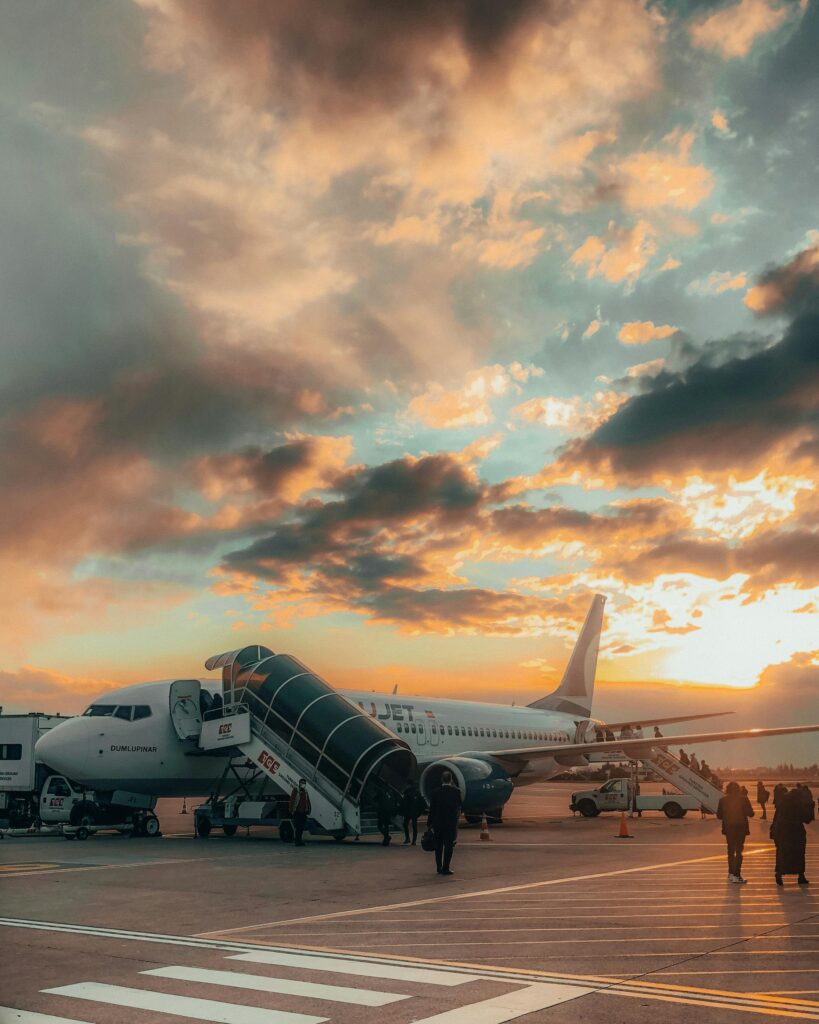
Why Airports Feel Like a Threat: A Trauma-Informed Perspective
Airports are engineered for logistical efficiency, not neurological safety. For a trauma survivor, this environment a cacophony of noise, light, and unpredictable demands can feel less like a gateway to travel and more like a psychological minefield.
This isn’t a choice or a weakness; it’s a wiring.
When the brain survives trauma, it recalibrates to protect you. Crowds, loud noises, and loss of control can activate the amygdala (the brain’s alarm system) faster than your conscious mind can reason. You’re not “overreacting at the airport” your body is following a well-worn survival protocol.
Many trauma survivors describe airports as:
- Too much noise all at once.
- Too many people scanning me.
- Too many rules and no control.
- My body goes into survival mode before I even understand why.
This guide blends trauma psychology, sensory science, somatic regulation, and Türkiye-specific travel insights to help you navigate your airport experience with grounding, clarity, and dignity.
Because healing doesn’t always start in therapy.
Sometimes it starts at Gate 204.

The Perfect Storm: Sensory Overload, Loss of Control & Unpredictability
Understanding this storm is the first step to learning how to weather it not by fighting your nervous system, but by working with its innate wisdom.
1. Sensory Overload
- fluorescent lights
- beeping scanners
- rolling suitcases
- echoing announcements
- unpredictable noises
- crowds moving in every direction
For a sensitive or dysregulated nervous system, this level of stimulation can trigger:
- dissociation
- hypervigilance
- panic
- emotional shutdown
Your body isn’t being “dramatic.”
It is trying to protect you.
2. Loss of Control
Trauma often involves a moment when control was taken from you.
Airports mirror this dynamic:
- you must follow instructions
- you surrender your belongings for screening
- you wait for someone else to approve your movement
- you can’t predict when things will change
Feeling trapped or controlled can activate old survival pathways especially for trauma rooted in powerlessness.
3. Unpredictability
Even seasoned travelers feel stressed by sudden:
- flight delays
- gate changes
- long lines
- crowds rushing
- last-minute announcements
To a trauma survivor, unpredictability is not an inconvenience it is a threat cue.
This is why airport anxiety is real, and why you deserve tools tailored to your body not generic advice like “just breathe” or “stay calm.”
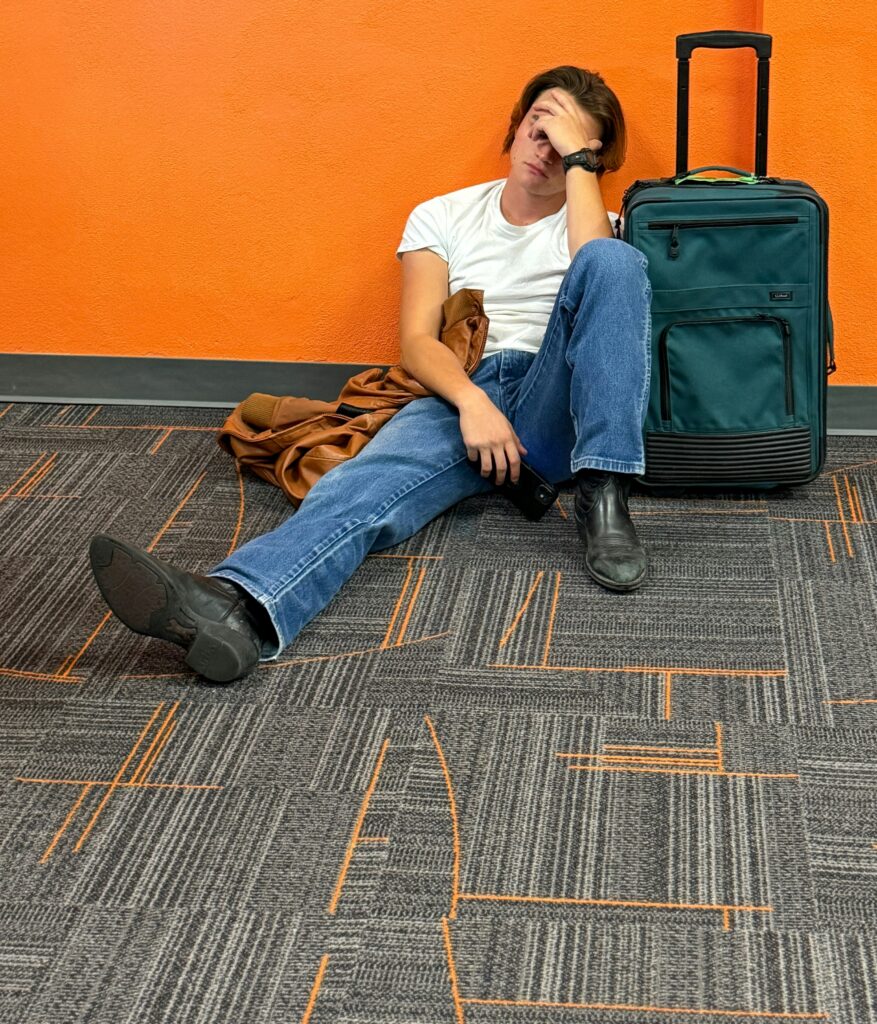
How Traditional Travel Advice Fails Sensitive Nervous Systems
Typical travel tips assume a regulated, neurotypical, emotionally stable body.
But trauma changes:
- sensory processing
- threat detection
- energy levels
- emotional regulation
- tolerance for unpredictability
Advice like:
- “Get to the airport early.”
- “Go with the flow.”
- “Just relax.”
does not work when your body is entering survival mode.
Trauma-sensitive travel requires:
- structured preparation
- sensory management
- compassionate self-talk
- grounding tools
- nervous system-friendly pacing
- low-stimulus strategies
- predictable steps
This guide gives you exactly that.

My personal breakthrough: From panic attacks to peaceful transitions in Turkish airports
Before we go any deeper, I want to share my own journey through airport anxiety, trauma activation, and nervous system healing. I want you to witness where I started, how overwhelmed I felt, and how I slowly moved from panic attacks to peaceful, manageable transitions especially in Turkish airports.
For years, I had no idea my body was holding onto a traumatic event that my mind still couldn’t fully process. I convinced myself I was functioning “normally,” but inside, everything felt impossible. Every small task , work, errands, even stepping outside became draining, overwhelming, and emotionally heavy. My nervous system was burning out.
To avoid constant panic attacks, I slowly shut down. I quit my job. I avoided going to the market, walking outside, or doing anything that demanded energy. I wasn’t living I was disappearing.
Eventually, I realized something needed to change.
I needed a new environment, a new rhythm, a place where I could breathe again.
So I chose Türkiye.
Traveling to Turkey wasn’t traumatic but it opened my eyes. It showed me that I wasn’t “too sensitive” or “asking too much.” I was a trauma survivor whose body had been desperately trying to communicate.
When I arrived at the airport, my panic attacks came in waves.
I felt disconnected from everything, as if I was floating outside myself.
Sounds felt blurry, my mind kept going blank, and I didn’t know how to ask for help because I didn’t even know what I needed.
The only tools I had were:
- breathing,
- focusing on one object,
- observing my body carefully,
- reminding myself that I was still here.
It took me a long time to understand that my body wasn’t betraying me.
It was begging me to slow down, to stop ignoring the signals, to finally listen.
Because when you don’t pause, your nervous system will eventually force you to and the price you pay is losing your sense of self. And that is worse than fear.
For me, airports weren’t the only triggers ,any new place could activate my trauma responses. But airports, with their sensory overload and unpredictability, were the hardest. And that is exactly why learning to navigate Turkish airports became a turning point in my healing.
As I began to listen to my body, everything slowly became more manageable.
Instead of ignoring, I started responding.
Instead of running, I began asking and searching.
Instead of freezing, I practiced grounding techniques.
Instead of judging myself, I realized I wasn’t “like everyone else” and that was okay.
I had an incredibly compassionate inner system trying to protect me.
My instincts weren’t the enemy they became a map.
My sensitivity wasn’t a weakness it became a guide.
My hyper-awareness wasn’t a curse it became a gift of observation.
And this guide you’re reading now?
It isn’t made to hide you.
Even if I suggest wearing sunglasses or a hat, it’s not to shrink yourself or disappear.
It’s to offer temporary relief until your body feels safe again because you deserve to take up space.
Your trauma didn’t make you unworthy.
It didn’t make you fragile.
It made you aware, intuitive, deeply connected to your environment.
And your healing isn’t about becoming “normal.”
It’s about becoming you, fully and authentically.
You’re not here to hide.
You’re here to glow again even if softly at first.
If anyone ever told you to shrink yourself to survive, that wasn’t a solution.
That was your nervous system’s old protective pattern.
But guess what?
You’re still breathing.
You’re still alive.
And your life is patiently waiting for you to choose one honest intention:
“I deserve better. My story is not over. And what happened to me is a chapter not the whole book.”
"Note: This guide is for informational purposes and is not a substitute for professional medical or therapeutic advice. Please consult with your healthcare provider for personalized strategies."
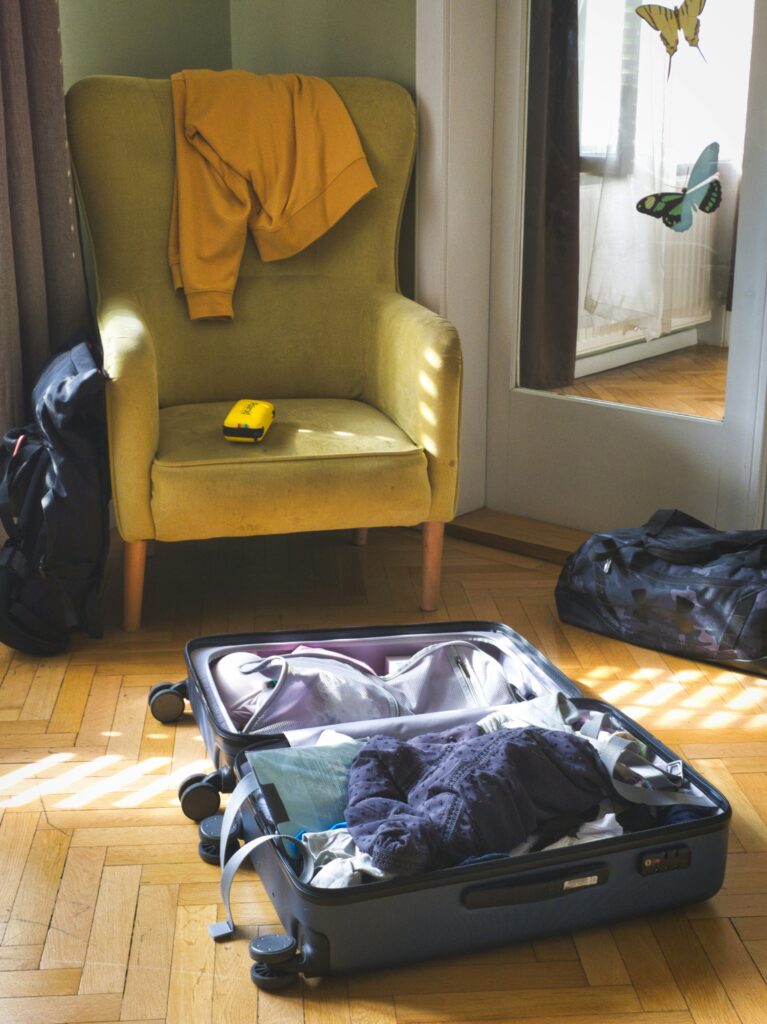
PART 1: The Pre-Airport Preparation Strategy
Regulation starts long before you enter the airport.
The 24-Hour Buffer Zone
Why the Day Before Travel Matters More Than You Think
The state of your nervous system before you enter the airport determines how you will handle the airport.
Most trauma survivors push themselves until the last minute:
- late packing
- poor sleep
- last-minute decisions
- emotional overwhelm
- overstimulation from errands
This creates a dysregulated baseline.
A dysregulated body + an overstimulating airport
= a guaranteed survival response.
The 24-Hour Buffer Zone Includes:
- no heavy emotional conversations
- minimal social interaction
- zero news or high-stimulation entertainment
- hydration and slow nutrition
- a sensory-friendly environment (dim lights, soft sounds)
- no caffeine after 4 PM
- pack slowly and early
This period is your nervous system runway the calmer you begin, the calmer you’ll remain.
note : Progress, Not Perfection
Start with a 2-hour buffer if that's what's manageable. The goal is intentional preparation, not perfection.
Sensory Reduction Protocol: Limiting Inputs Before Airport Exposure
The goal: build a regulated sensory system before exposing yourself to the sensory chaos of an airport.
For 12–24 hours:
- Keep lights low.
- listen to the QURAN ( Muslims’ holy book ) as it is calming and out of cultural immersion
- Use brown noise.
- Avoid strong smells.
- Limit screen time.
- Wear comfortable, loose clothing.
- Avoid multitasking.
Think of it as detoxing from stimulation so you have more capacity for what’s ahead. read also , The Trauma-Informed Traveler’s 7-Day Preparation Guide
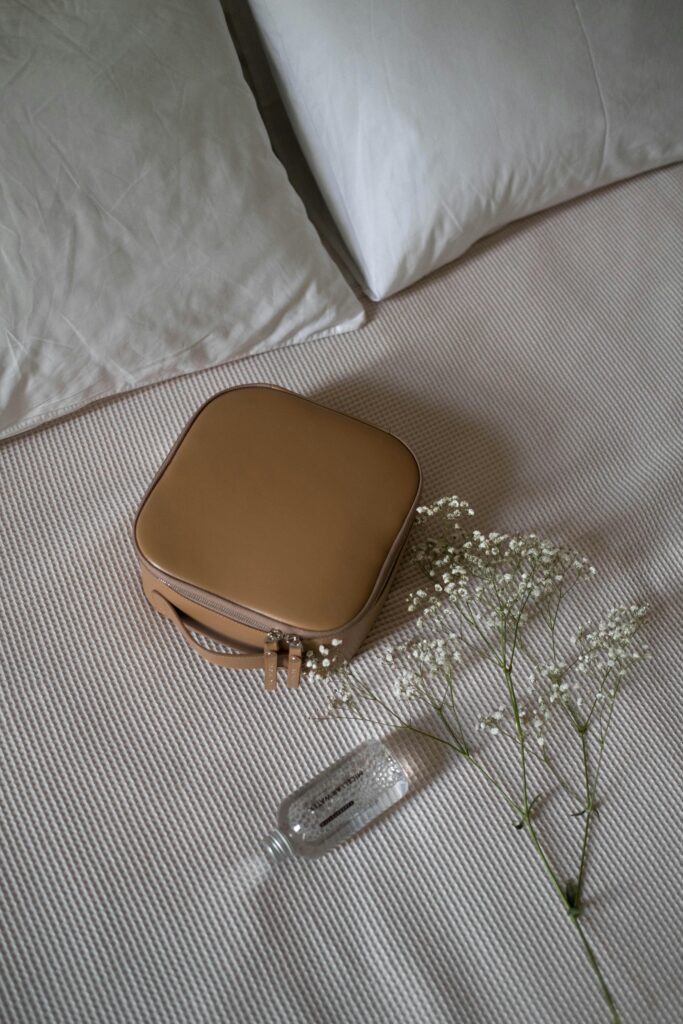
Your Travel Sanctuary: Building a Sensory First-Aid Kit
A trauma survivor should never rely on airport conditions to regulate.
You bring your calm with you.
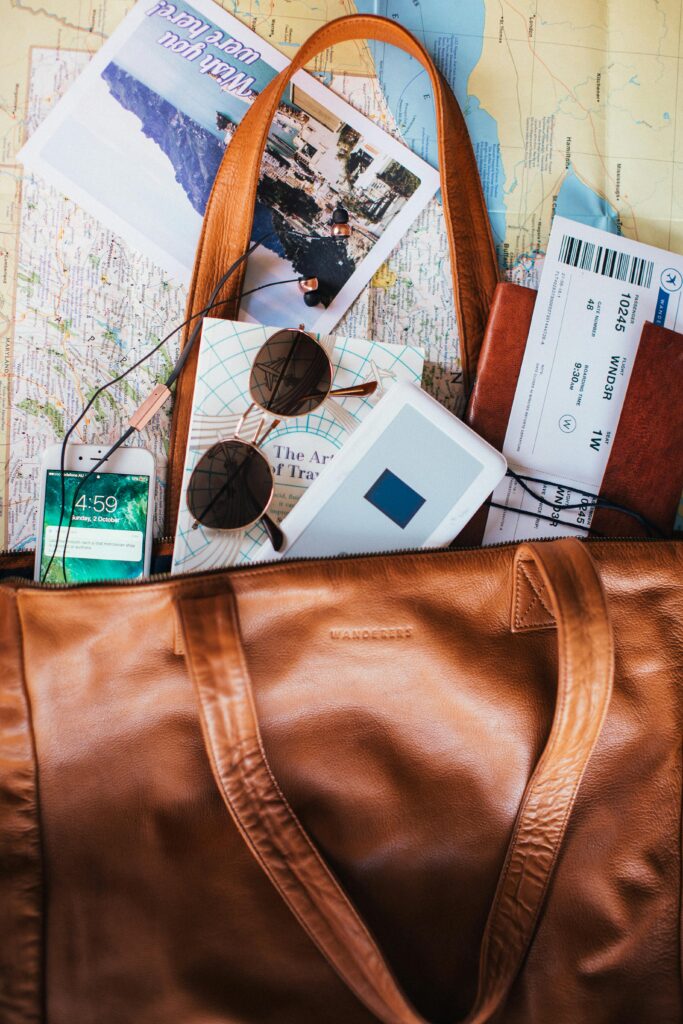
Your “Calm Container” should include:
- Auditory Shield: Noise-canceling headphones pre-loaded with brown noise or the Muslims’ holy book (Quran )playlists.
- Olfactory Anchor: A portable essential oil inhaler (lavender or bergamot) to quickly engage the parasympathetic nervous system.
- Tactile Grounders: A worry stone, a silk scarf, or a small, cool metal object for tactile grounding during dissociation.
- Cognitive Lifeline: A written crisis plan with your personal grounding steps and affirmations. (In panic, reading is easier than remembering).
Pro Tip: Pack this kit in your personal item, not checked luggage. It’s your in-flight emotional seatbelt.
Digital Preparation for Real-World Calm
Technology can reduce overwhelm when used wisely.
Online Check-In & Mobile Boarding Passes
Reducing Human Interaction Points
Less human interaction = less stress.
Online check-in allows you to:
- avoid long counter lines
- go straight to security
- skip unnecessary conversations
- reduce unpredictability
This is a trauma-friendly step that saves both energy and emotional bandwidth.
Download the Istanbul Airport (IST) App
This app is a lifeline for sensory-sensitive travelers.
It offers:
- terminal maps
- quiet zone locations
- restroom and prayer room locations
- live flight updates
- walking distances between gates
Knowing where you’re going reduces threat perception and supports nervous system regulation.
Download Offline Meditation Tracks Designed for Travel
Look for:
- grounding meditations
- somatic regulation tracks
- brown noise
- slow rhythmic breathing guides
These become essential during:
- security lines
- boarding
- sudden overwhelm
- gate changes
The Trauma-Informed Packing Strategy
This is where your Airport Survival Kit lives.
Your Airport Survival Kit Includes:
1. Noise-Canceling Headphones
Load them with:
- brown noise
- ocean waves
- soft ambient sounds ( Muslims’ holy book is your sanctuary )
These protect against the most triggering sensory input: unpredictable noise.
2. Essential Oil Inhaler
Lavender or bergamot helps activate the parasympathetic nervous system.
3. Tactile Grounding Tools
- textured worry stones
- soft keychains
- velvet fabric strips
- cooling metal objects
Examples:
These help you stay connected to your body when anxiety pulls you out.
4. Written Crisis Plan
I’ve learned that the real crisis isn’t the panic attack itself it’s what happens when we try to push away our trauma or force ourselves to “stay in control.” For years, I treated my panic and anxiety like enemies, then like familiar companions. Eventually, I stopped fighting the sensations. I started meeting them with acceptance, letting my body signal what it needed instead of silencing it.
This shift from resistance to understanding was one of the most grounding tools in my healing journey.
But if you’re someone who struggles with the need to control every detail (like I once did), navigating airport anxiety or sudden trauma responses can feel overwhelming. That’s where a Crisis Written Plan becomes powerful. It gives structure when everything feels chaotic, and it reminds your nervous system that safety is still within reach.
Include:
- grounding steps
- recognize early signs of sensory overload
- affirmations
- people to contact
- steps for overwhelm
- a gentle massage to yourself that you have made it through a lot (name them and call all situations that you have been through ) , and this time only to take care of you and shin inside out
Seeing instructions in writing can interrupt dissociation or panic.
PART 2: The Sensory Navigation System
How to move through the airport without letting the airport move through you.
Trauma survivors don’t just need directions they need predictability, sensory control, and pacing. This section teaches you how to manage light, sound, tactile overwhelm, and spatial navigation using gentle, psychologically informed techniques rooted in somatic regulation.
Mapping Your Airport Experience
To a dysregulated nervous system, unfamiliar spaces feel threatening.
Mapping your journey even loosely gives the brain a sense of control.
Before you leave home:
- Identify your terminal
- Know where security is
- Note where the restrooms are
- Locate prayer rooms or quiet spaces
- Check distances between gates
- Look at walking times
- Save screenshots in case your internet fails
use the official Istanbul Airport (IST) app or website to take a virtual walk-through of your terminal. This act of visualization in a safe space can significantly reduce threat perception by building familiarity. check here
This transforms the airport from an overwhelming maze into a predictable path.
Your brain is less reactive when it knows what’s coming next.
Visual Overload Management
Airports are visually chaotic: fluorescent lights, fast movement, screens, signs, people rushing, bright colors.
All of this can overstimulate the visual processing centers in the brain.
Here’s how to protect yourself.
1. Sunglasses as Sensory Filters
Wearing sunglasses indoors isn’t rude it’s regulatory.
Tinted lenses shield your nervous system from:
- harsh airport lighting
- visual clutter
- constant motion
- blinking screens
sunglasses might not suit everyone. a wide-brimmed hat to create visual “blinders,” or simply focusing on a single, calm detail (e.g., a pattern on the floor) while walking.
This reduces visual input by 30–40% and immediately lowers physiological arousal.
2. Strategic Seating: Face Windows, Not Crowds
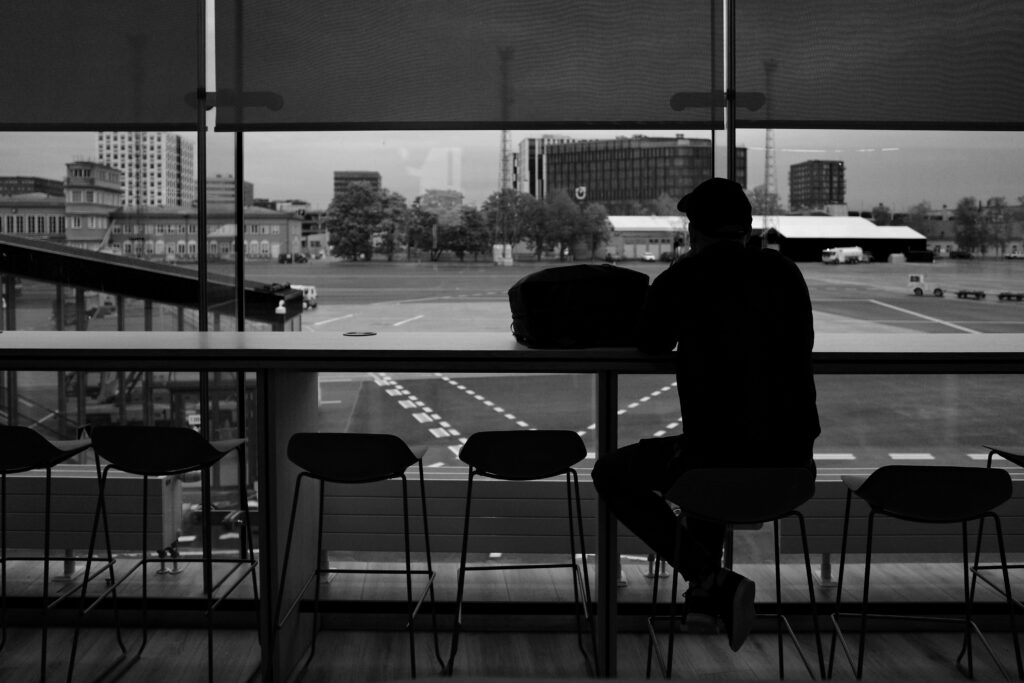
Sitting with your back to a wall and your eyes toward a window is one of the safest configurations for trauma survivors.
Why?
- fewer visual distractions
- reduced hypervigilance (you can see your surroundings)
- natural light regulates the circadian rhythm
- your brain doesn’t waste energy tracking movement behind you
If a window isn’t available:
- sit facing a single direction
- avoid the center of the concourse
- avoid facing TV screens
Your seat is your safe base.
3. The “Soft Gaze” Technique
A soft gaze is a mindfulness-based method that reduces visual tension.
Instead of sharply focusing, you:
- relax your eyes
- expand your peripheral awareness
- let objects appear rather than forcing focus
This cues the brain:
“We are not in danger right now.”
Use it while:
- walking through terminals
- waiting in lines
- navigating crowds
It decreases threat perception and lowers the sympathetic nervous system (fight/flight).

Auditory Regulation Protocol
Sound is the most common trigger for airport anxiety.
Announcements, crying children, suitcase wheels, security alarms, chatter—
your ears absorb everything.
Here’s how to minimize auditory overload.
1. Custom Soundscapes
Create a playlist that blends familiar comfort + steady rhythm.
Highly effective combinations:
- Brown noise
(excellent for grounding, especially when traveling to Türkiye) - Low-frequency ambient sounds
Helps stabilize heart rate variability. - Ocean waves or rainfall
Ideal during boarding or long lines.
Use noise-canceling headphones with transparency mode if you need to remain aware of your surroundings.
2. Communication Cards for Minimal Verbal Interaction
Some trauma survivors shut down in overwhelming moments.
Carrying a small card can spare you from having to speak.
Examples:
- “I’m having difficulty speaking right now.”
- “I need a quiet space.”
- “Please give me a moment.”
- In Turkish:
- “Biraz zamana ihtiyacım var.” (I need a little time.)
- “Sessiz bir yer var mı?” (Is there a quiet place?)
Showing a card feels easier than forcing words through panic.
3. Identifying Airport “Audio Safe Zones”
Most airports including Turkish ones have places with lower noise levels:
- prayer rooms (mescit / multi-faith rooms)
- passport control hall corners
- lounges
- quiet seating pods
- unused gates
- family rooms
- airport hotels inside the terminal
A growing number of international airports now offer ‘quiet rooms’ or ‘sensory spaces’ . Check the IST website or inquire at an information desk upon arrival.
These are not just quiet they are predictable.
Predictability = safety for trauma survivors.

Tactile Grounding Techniques
Touch is one of the fastest ways to interrupt panic or dissociation. it engages the proprioceptive system, which has a direct calming effect on the nervous system
Airports overstimulate your upper senses (sight, sound), so engaging the tactile system helps rebalance you.
1. The 5-4-3-2-1 Method (Trauma-Sensitive Version)
Traditional grounding can feel overwhelming to trauma survivors, so here is the gentler version:
5 – Touch
Notice five textures:
- your clothing
- your bag strap
- a smooth stone
- the seat beneath you
- your own hands
4 – Breathe
Four slow breaths. No counting. Just slow.
3 – Listen
Identify three non-threatening sounds:
- your playlist
- your breath
- distant footsteps
2 – See Softly
Two objects in your soft gaze, not sharp focus.
1 – Anchor Phrase
One grounding sentence, such as:
“I am here, I am safe, this moment is not my past.”
2. Weighted Lap Pad for Queue Anxiety
A small 1–2 kg travel-sized weighted pad can:
- reduce panic
- lower cortisol
- stabilize breathing
- reduce dissociation
Use it:
- in security lines
- at the gate
- during boarding
It gives your nervous system a sense of containment.
3. Barefoot Grounding in Bathroom Stalls (When Safe)
“Only do this in a private, clean bathroom stall you feel comfortable in, and be mindful of the floor surface.”
One of the quickest ways to regulate:
- slip off your shoes
- place your feet flat on the floor
- spread your toes
- press down firmly
This activates proprioception a stabilizing sensory channel often ignored in traumatic overwhelm.
Even 30 seconds can interrupt spiraling panic.
Türkiye-Specific Airport Guide
Because every airport has its own sensory personality.
Istanbul Airport (IST)
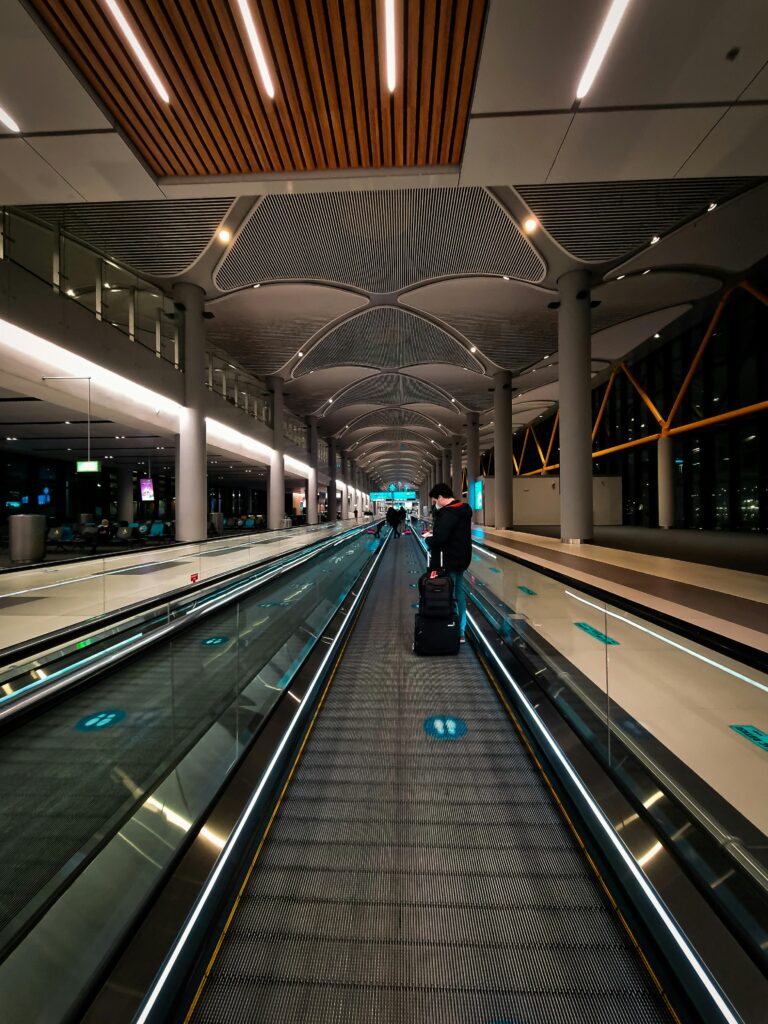
One of the largest airports in the world beautiful, but intense for sensory-sensitive travelers.
Best Sensory-Friendly Locations:
- Multi-faith prayer rooms (often very quiet, dimly lit)
- Lounges with day passes
- Unused gates near C or F concourses
- YOTELAirport (inside the terminal)
- Quiet seating areas near THY business lounge entrance
Best Times for Sensory-Friendly Travel:
- 11 PM – 7 AM (least crowds)
- early afternoons on weekdays
Turkish Airlines Support
THY staff are generally warm and responsive when you quietly signal distress.
You can request:
- priority assistance
- help during boarding
- quiet seating areas
- emotional support during panic episodes
on domestic flights within Turkey, announcements and assistance are commonly available in both Turkish and English
Ankara (ESB) & Izmir (ADB)
Smaller, calmer, easier to navigate.
Ideal for sensory-sensitive travelers who want less chaos than IST. In 2024, ESB served ~12.8 million passengers and ADB served ~11.5 million, compared to Istanbul Airport’s nearly 80 million
Benefits:
- fewer crowds
- shorter walking distances
- lower noise levels
- simpler layouts
PART 3: The Human Interaction Framework
How to move through unavoidable interactions without overwhelming your nervous system.
For many trauma survivors, the sensory environment of airports is only half the stress.
The other half is human interaction—speaking to strangers, asking for help, being observed, being questioned, feeling rushed, or feeling judged.
This section gives you a trauma-informed communication blueprint to stay grounded, safe, and in control, even during intense moments like security checks and gate interactions.
Strategic Communication for Trauma-Sensitive Travelers
Trauma affects communication in high-stress environments. You may:
- lose your words
- speak too quickly
- shut down completely
- become overly apologetic
- feel watched
- fear being misunderstood
This is normal when the nervous system is dysregulated.
The goal here is not to “communicate perfectly” but to communicate safely.
Prepared Turkish Phrases for Low-Stress Interactions
You don’t need to be fluent to communicate effectively.
These simple, regulation-friendly Turkish phrases help you navigate airports in Türkiye with less pressure and more ease.
To ask for space or quiet:
“Sessiz bir yer var mı?”
Is there a quiet place?
To communicate overwhelm:
“Biraz zamana ihtiyacım var.”
I need a little time.
To ask for help without explaining trauma:
“Bana yardımcı olabilir misiniz?”
Can you help me?
If you are dysregulated or can’t speak much:
“İyi hissetmiyorum.”
I am not feeling well.
These short statements communicate what you need without oversharing or triggering past memories.
Non-Verbal Communication: A Lifeline During Shutdown
When the body enters survival mode, speech can disappear.
This is a physiological response, not a failure.
Prepare:
- hand signals (flat palm for “wait,” hands over heart for “thank you”)
- a pre-written card saying:
- “I am overwhelmed and need a moment.”
- “I have anxiety; I need slow communication.”
- “I need quiet.”
- A translation app pre-loaded with your key phrases for offline use is a key .
Airport staff, especially in Türkiye, tend to be warm, curious, and patient.
Showing a card is completely acceptable.
Security Checkpoint Preparation
For many survivors, this is the hardest part of the airport.
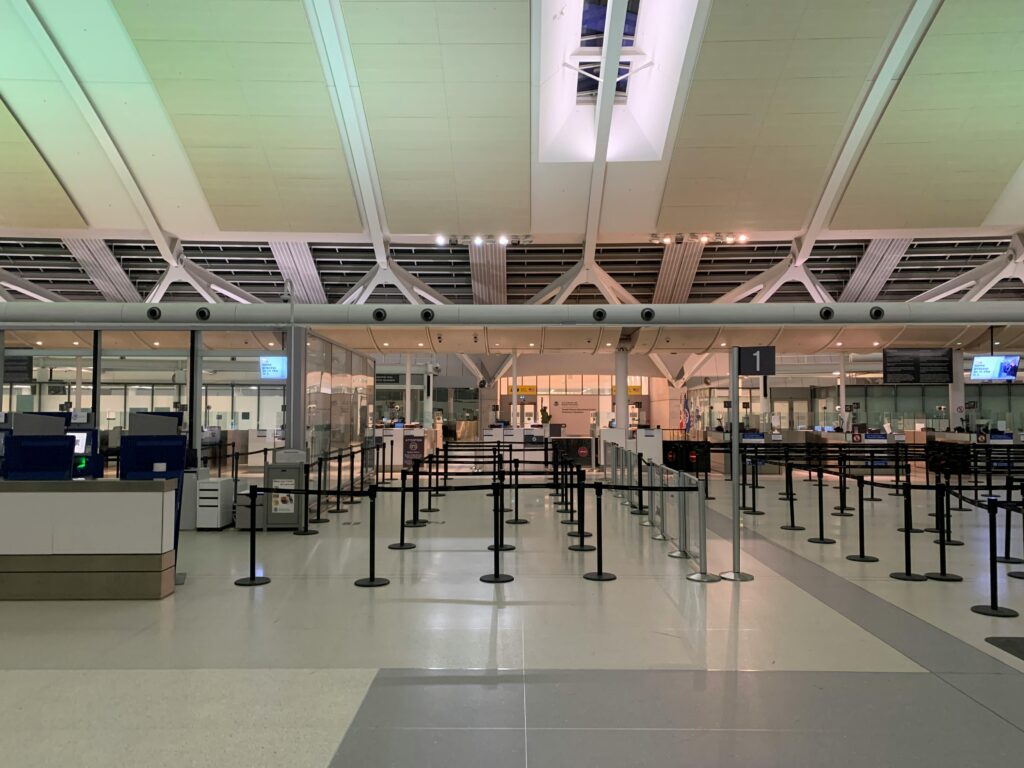
Security screening triggers trauma responses because it combines:
- being watched
- being told what to do
- losing control
- unpredictable rules
- close physical proximity
- loud noises
- separation from your belongings
This is a perfect storm for panic.
The goal is to bring predictability where unpredictability usually dominates.
The Desensitization Protocol: Practice at Home
Before travel day, rehearse the motions of security as “Dry Run”
- practicing with a timer, wearing travel-day clothes, and playing airport ambiance sounds from YouTube to simulate the environment.
- remove shoes
- place items in a tray
- take out electronics
- unzip bag compartments
- stand still with arms out
Your body learns through repetition.
Practicing these motions at home reduces shock and sensory overwhelm at the real checkpoint.
Fast-Track Security (Global Options)
If available for your passport:
- Fast Track
- Premium Lane
- Priority Security
- Airline Gold/Silver status
- Business class tickets (sometimes worth the investment for sensory reasons)
These shorten:
- lines
- noise exposure
- crowding
- waiting unpredictability
For travelers to Türkiye:
Turkish Airlines sells upgrades for priority lanes at many airports, even if you booked economy.
Well worth it for trauma-sensitive travelers.
Medical Exception Documentation
If you have severe trauma-related symptoms or need to carry tools, ask your therapist or clinician for:
- a letter explaining your condition
- permission to carry sensory aids (weighted pad, oils, etc.)
- allowance for extra time
You do not need to disclose trauma details.
A simple statement of “anxiety disorder requiring accommodations” is enough.
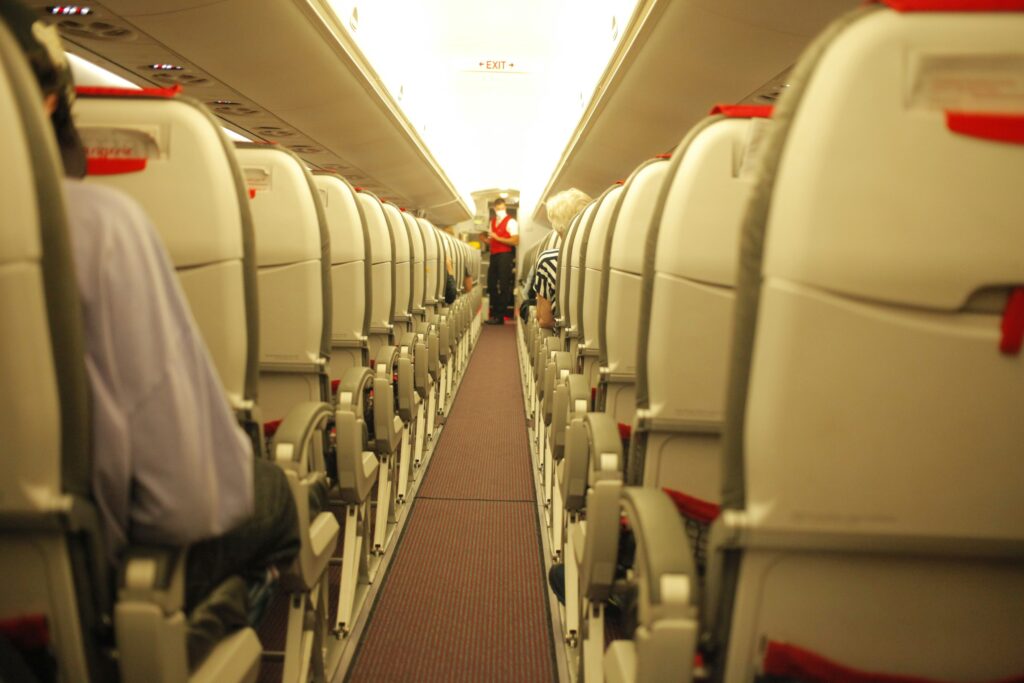
The “Airport Angel” Strategy
Because one kind person can change your whole travel experience.
An Airport Angel is any staff member who:
- communicates gently
- offers help without pressure
- responds to distress with warmth
- treats you like a human, not a problem
- slows down their instructions
- makes eye contact in a grounding, non-intrusive way
You will find these people at:
- information desks
- airline counters
- boarding gates
- security lanes
- lounges
- airport assistance services
You can proactively identify someone who feels safe before you need them.
How to Identify a Safe Person (Signs to Look For)
A Safe Person typically:
- speaks calmly
- doesn’t rush interactions
- seems patient
- smiles gently
- maintains respectful distance
- explains things kindly
Trust your body.
Trauma survivors often sense safety faster than others.
Pre-Arranged Assistance Programs (Türkiye Focus)
services like “Sunflower Lanyard” programs for hidden disabilities are growing globally.
Turkish airports offer:
- wheelchair assistance (can be used for anxiety as a medical reason)
- companion escort through security
- priority check-in
- guidance to quiet areas
- help with border control navigation
These services are free or low-cost depending on the airport.
You can request assistance:
- during booking
- through the airline app
- by contacting customer service 48 hours before your flight
This support is especially helpful if panic, dissociation, or sensory overwhelm are concerns.
Cultural Note: Turkish Airport Staff Are Often Incredibly Helpful
In Turkish culture, helping a guest (misafir) is a duty and a honor. This isn’t just kindness; it’s a deep cultural script staff will follow, making their likely helpfulness more predictable and less anxious for the reader.
They won’t demand explanations.
They won’t judge you for needing help.
They often respond quickly and compassionately.
You are not a burden.
You are a human being deserving of care.

PART 4: Real-Time Regulation Techniques
Because even the best preparation can’t prevent every surge of overwhelm.
Airports are unpredictable, and trauma-sensitive bodies respond to unpredictability in real time.
This section gives you actionable, immediate regulation tools not generic advice, but trauma-informed strategies that work in the middle of panic, dissociation, sensory overload, or shutdown.
These tools are crafted to support the specific needs of:
- PTSD survivors
- sensory-sensitive travelers
- neurodivergent travelers
- people with generalized anxiety
- travelers who struggle with crowds, noise, or loss of control
You don’t have to “stay calm.”
You only need tools that bring you back to your body, one moment at a time.
The Panic Attack Interruption Protocol
A 5-minute trauma-informed sequence you can use anywhere in the airport.
Most panic protocols focus on breathing first but for many survivors, breathwork triggers more panic.
This version is body-first, sensory-based, and designed for crowded environments.
Step 1: Find a Micro-Safe Space
This doesn’t need to be a private room.
You can regulate even in:
- a restroom stall
- a corner by a wall
- an empty gate
- a quiet seating nook
- the space between columns
- the area near prayer rooms
Anywhere the sensory input drops even 20% is enough.
Step 2: Apply Weighted Pressure to Your Shoulders
Pressure tells your body:
“We are contained. We are here. We are safe enough.”
Deep pressure touch stimulates the parasympathetic nervous system, helping to counter the fight-or-flight response.
You can use:
- your hands
- your backpack
- a lightweight weighted pad
- a jacket folded over your shoulders
Hold pressure for 10–20 seconds.
Let your shoulders drop naturally.
This is somatic grounding not thinking your way into calm, but feeling your way into safety.
Step 3: 4-7-8 Breathing (Modified for Trauma)
Traditional instructions can feel too rigid, so here’s the gentle version:
- inhale softly for 4 seconds
- hold for 2–3 seconds (not 7 if it feels too long)
- exhale slowly for 6–8 seconds
Long exhale = parasympathetic activation (the “rest-and-digest” system).
Your only job is to let the out-breath be longer than the in-breath.
Everything else is optional.
Step 4: Cold Water Reset
Cold temperature resets the vagus nerve and interrupts the panic spiral.
Options:
- cold water on wrists
- splash cold water on face
- hold a cold metal water bottle
- sip cold water slowly
This brings your body out of the “danger mode” loop.
holding the cold bottle or applying water to the back of the neck or wrists if splashing the face feels too shocking or impractical in public.
Step 5: Anchor Phrase Repetition
Choose one phrase before travel.
Repeat it silently or whisper it once every exhale.
Options:
- “This moment is not my past.”
- ” I’m protected by unseen power , and wisdom”
- “I am here, I am safe enough.”
- “My body is reacting, not remembering.”
- “This feeling will pass.”
- “I don’t have to be calm; I only need to breathe.”
Anchor phrases redirect your brain from panic to presence. for more Part 1 (The Pre-Airport Preparation Strategy)
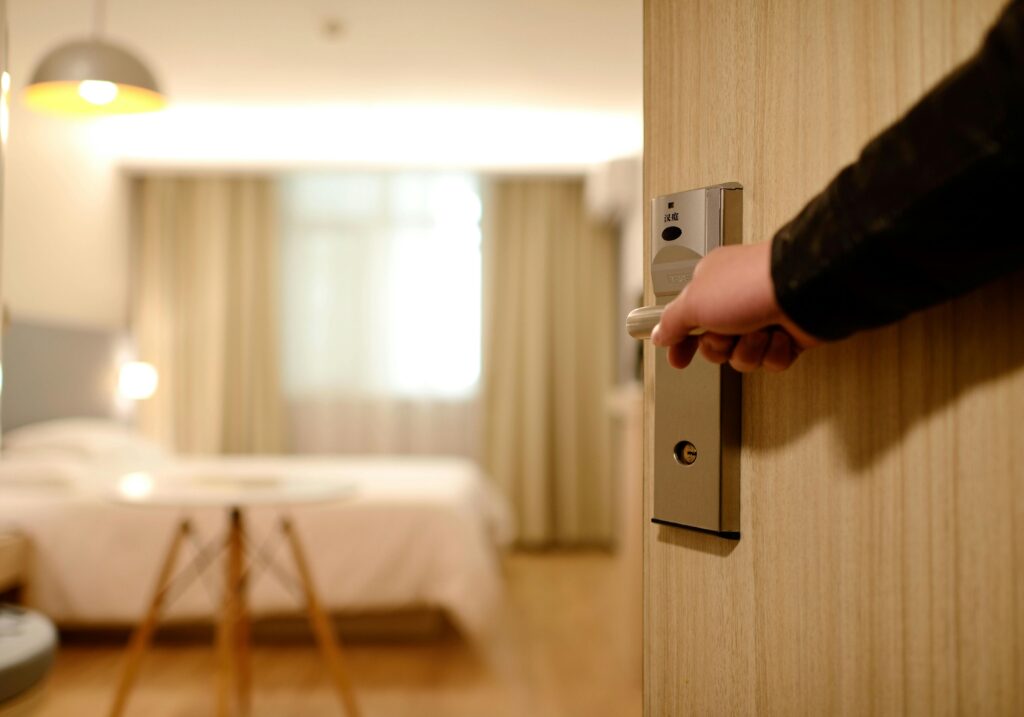
The “Quiet Zone” Network
Airports have more safe spaces than most travelers realize.
You just need to know where to find them.
These areas usually have:
- lower noise
- minimal foot traffic
- softer lighting
- fewer announcements
- more personal space
1. Lounges (Even Without Business Class Tickets)
Most airports offer day passes, even if you’re flying economy.
day-pass availability and price can often be checked and purchased via the airport’s or lounge’s official website or app (e.g., “Istanbul Airport VIP Services” or “LoungeBuddy” app).Benefits for trauma survivors:
- consistent lighting
- controlled noise
- comfortable seating
- fewer people
- easier access to bathrooms
- staff trained to support anxious travelers
In Türkiye, lounges are exceptionally comfortable and calm, especially Turkish Airlines lounges.
2. Airport Hotels (Hourly Rooms Available)
Inside many major airports including IST you can book: for IST you can visit the website here
- 1-hour
- 2-hour
- 3-hour
- half-day stays
These micro-breaks are life-changing.
Especially if:
- your flight is delayed
- you’re overwhelmed
- you need a shutdown-safe space
- you want to shower or lie down
This is sensory refuge in the middle of chaos.
3. Prayer Rooms (Multi-faith Quiet Spaces)
In Turkish airports, these rooms are quiet, dim, and deeply calming.
Even if you are not religious, you are welcome to enter respectfully and sit quietly.
These rooms are:
- low sensory
- low noise
- private
- peaceful
- grounded
A hidden sanctuary for travelers who need silence.
“Remember to remove your shoes before entering, and maintain a quiet, respectful demeanor. These spaces are for contemplation and are welcoming to all.”
4. Medical Centers
Every major airport has a medical office or first aid center.
If you are:
- shaking
- dissociating
- lightheaded
- unable to speak
- overwhelmed
You can approach and say:
“I am not feeling well; I need help.”
They will bring you inside, away from the chaos.
This is a safe option for extreme overwhelm.
Medical staff are trained to handle acute stress reactions. You can simply state, ‘I am experiencing severe anxiety and need a quiet place to sit down.’ You do not need to justify or explain your trauma’.
Movement as Regulation
Stillness can intensify anxiety.
Movement releases the freeze response and restores nervous system flow.
Here’s how to regulate through motion in an airport environment.
1. Strategic Walking Routes to Avoid Crowds
Use airport maps to find:
- long empty hallways
- less-used concourses
- quiet corners near late-night gates
Walking without pressure, at your own pace, reduces panic chemicals.
2. Progressive Muscle Relaxation (Subtle Version)
You don’t need a private room.
Nobody will even notice.
Try:
- press toes into the floor → release
- tighten thighs → release
- squeeze fists → release
- lift shoulders → release
This helps drain adrenaline from your system.
3. “Window Gazing” Meditation Technique
Look out a window at:
- the runway
- the sky
- distant planes
- the horizon
Let your gaze soften.
Windows offer:
- depth
- space
- openness
- visual relief
This counters the claustrophobia of crowds.
4. The Somatic “Orienting Response”
This is a natural, animal-based calming method.
Do this slowly:
- turn your head to the left
- look softly
- pause
- turn your head to the right
- look softly
- pause
This tells your nervous system:
“No danger here. We can settle.”
Your sensitivity is a testament to your survival. Now, you are using that same awareness to navigate the world with new tools and deep self-compassion.
Your nervous system learned to be alert because it had to be.
Now you are teaching it that the world can be navigated gently, safely, and on your terms. Every small regulation moment is an act of reclaiming your power.
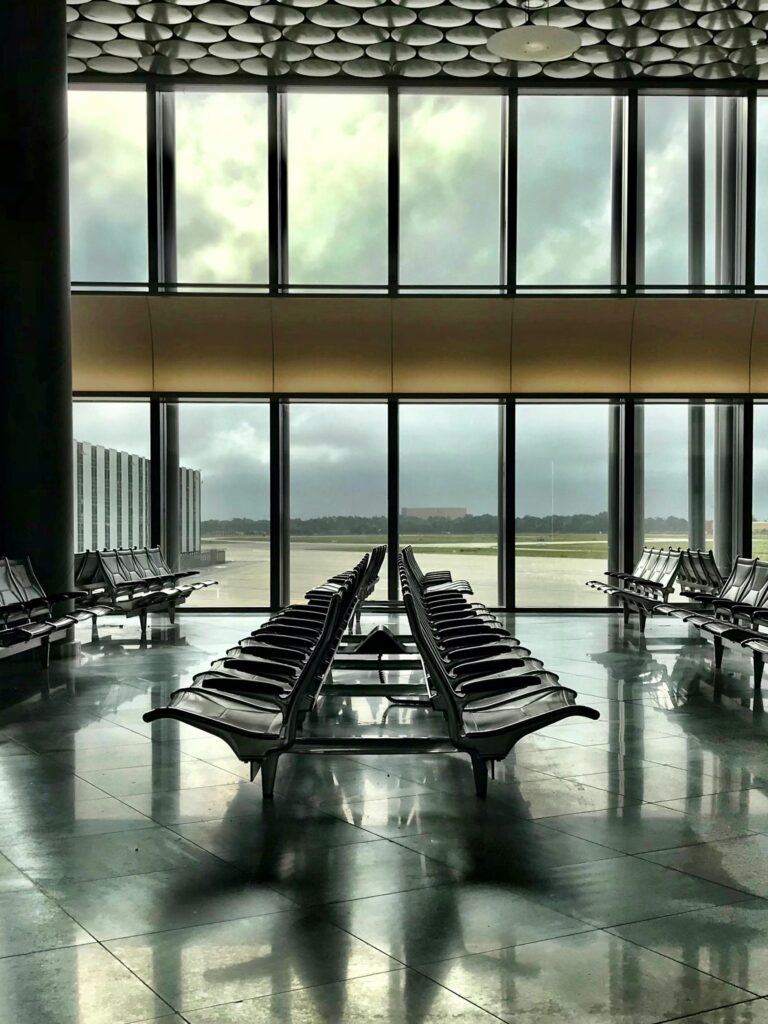
PART 5: The Boarding Bridge Transition
The moment where fear spikes… but also where transformation begins.
The boarding process lining up, entering the jet bridge, stepping onto the plane is one of the most common trigger zones for trauma survivors.
Not because of the flight itself, but because of:
- crowding
- rushing
- tight spaces
- lack of escape routes
- pressure to move quickly
- being watched by others
- doors closing behind you
In trauma psychology, these sensations often echo earlier experiences of confinement, loss of control, forced movement, or trapped environments.
This section teaches you how to cross the threshold from the airport to the aircraft with steadiness, clarity, and dignity.
The Final Hurdle: Gateway to Healing
Boarding is not just a logistical step.
It is a psychological threshold.
Your body might experience:
- racing heart
- shallow breath
- dizziness
- panic spikes
- dissociation
- fear of being trapped
But it’s also the moment where many survivors report something unexpected:
power.
pride.
a sense of possibility.
You are not just boarding a plane.
You are boarding your own healing journey.
Let’s make this step manageable and meaningful.
Boarding Last: The Strategic Advantage
This is one of the simplest, most effective trauma-sensitive strategies.
Why boarding last helps:
- fewer people crowding behind you
- shorter time inside a congested jet bridge
- minimal rushing
- easier communication with staff
- less noise
- no long period of sitting in a full cabin
- more time to regulate before entering
For some, boarding last can increase anxiety about overhead bin space. If this is a concern, consider boarding with your designated group and using the ‘Threshold Ceremony’ at your seat instead.
If you have anxiety or sensory sensitivity, you can calmly tell the gate agent:
“I get overwhelmed during boarding. May I board last?”
In Türkiye, gate staff are often incredibly accommodating when approached gently.
Seat Selection Science:
Seat choice can make or break your in-flight experience.
Choose based on the root of your overwhelm:
If you fear confinement → Aisle Seat
Better for:
- people who need regular movement
- panic attack sensitivity
- claustrophobia
- feeling trapped
- quick access to escape routes
Aisle seats give the body psychological relief.
If you need sensory calm → Window Seat
Better for:
- sensory overload
- visual grounding
- dissociation
- social anxiety
- people who avoid being bumped
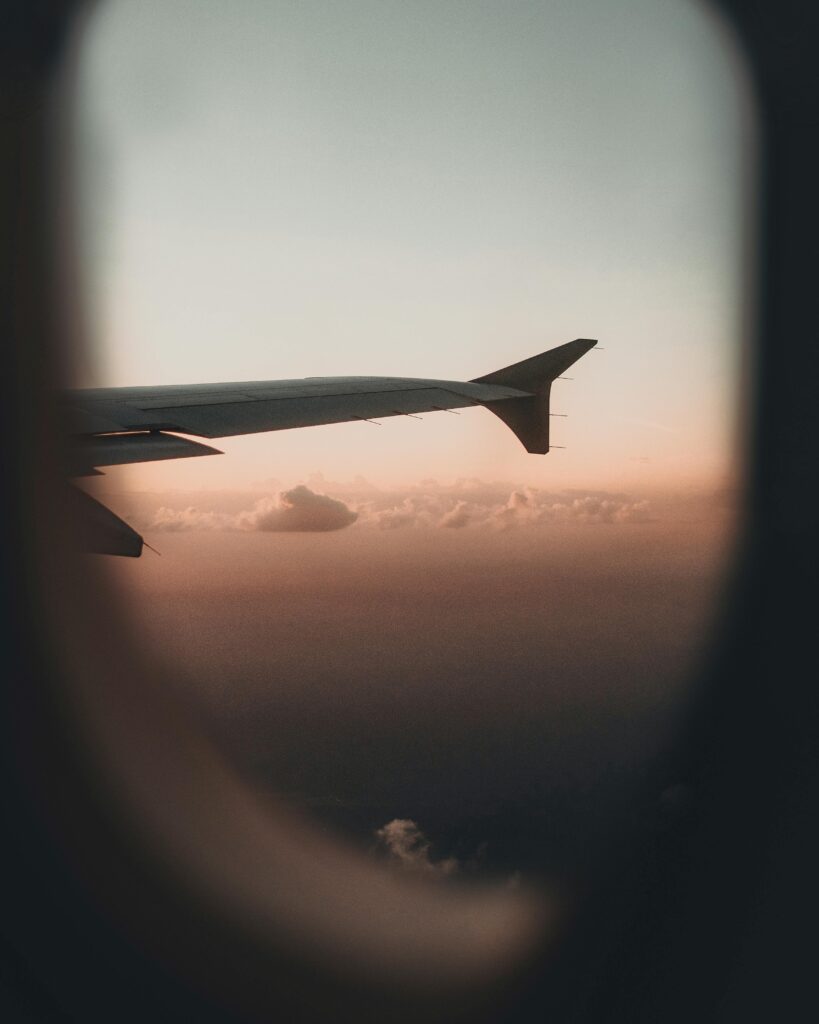
You can lean against the wall, rest your head, and look outside—using the sky as a grounding tool.
If you have trauma around proximity to others → Window Seat
It reduces:
- unexpected touches
- people squeezing past
- sense of exposure
If you freeze easily → Aisle Seat
Because movement is one of your strongest regulation tools.
if you feel safest buffered between two calm travelers →Middle Seat
While often least preferred, if you feel safest ‘buffered’ between two calm travelers, it can be an option. Bringing a grounding object to hold can make this space your own.
There is no wrong choice only the right nervous system match.

The “Threshold Ceremony”: A Personal Ritual for Crossing into the Jetway
Many trauma survivors benefit from ritual a small symbolic act that tells the nervous system:
“This is my choice. I am not reliving the past.”
Here are trauma-sensitive threshold rituals:
1. The Touchstone Ritual
Hold your grounding stone (small one ).
Feel its temperature, weight, and texture.
Whisper:
“I choose this.”
2. The Three-Step Breath
Before entering the jet bridge:
- inhale
- pause
- exhale
Repeat three times.
3. The Hand-to-Heart Moment
Place one hand on your chest for a single breath.
This grounds you in your body.
4. The “Past vs Present” Affirmation
Silently say:
“This moment is safe enough. I am in the present.”
5. The Intention Setting
Speak an intention quietly:
- “I am traveling toward peace.”
- “I am allowed to take up space.”
- “My healing matters.”
- “I deserve this journey.”
These small rituals anchor you during the transition into the airplane.
6. Orienting to Safety
Before stepping onto the jet bridge, slowly look left and right to consciously recognize the safe, stationary airport environment. This simple act cues the nervous system that you are not trapped.
In-Flight Preparation: Creating a Sensory Bubble
Once you enter the plane, your goal is to create a micro-environment of safety that travels with you.
Here’s how.
Step 1: Claim Your Space Immediately
Before other passengers settle:
- take out your headphones
- place your grounding objects within reach
- adjust your seat belt comfortably
- pull down the window shade if needed
- place your “calm container” under the seat
Creating order = reducing threat.
Step 2: Communicate Your Needs (Simple, Non-Detailed)
You do not need to explain trauma or give personal details.
Simply tell the flight attendant:
“I get anxiety during flights. If I look overwhelmed, could you please speak gently or give me a moment?”
Turkish Airlines attendants are known for:
- kindness
- patience
- empathy
- cultural warmth
Many will check on you discreetly during the flight.
Step 3: Establish Your Sensory Bubble
Turn your seat into a cocoon:
- headphones on
- soft scarf or hoodie
- essential oil inhaler ready
- window shade down if overstimulated
- download calming music or brown noise
- hold your tactile object
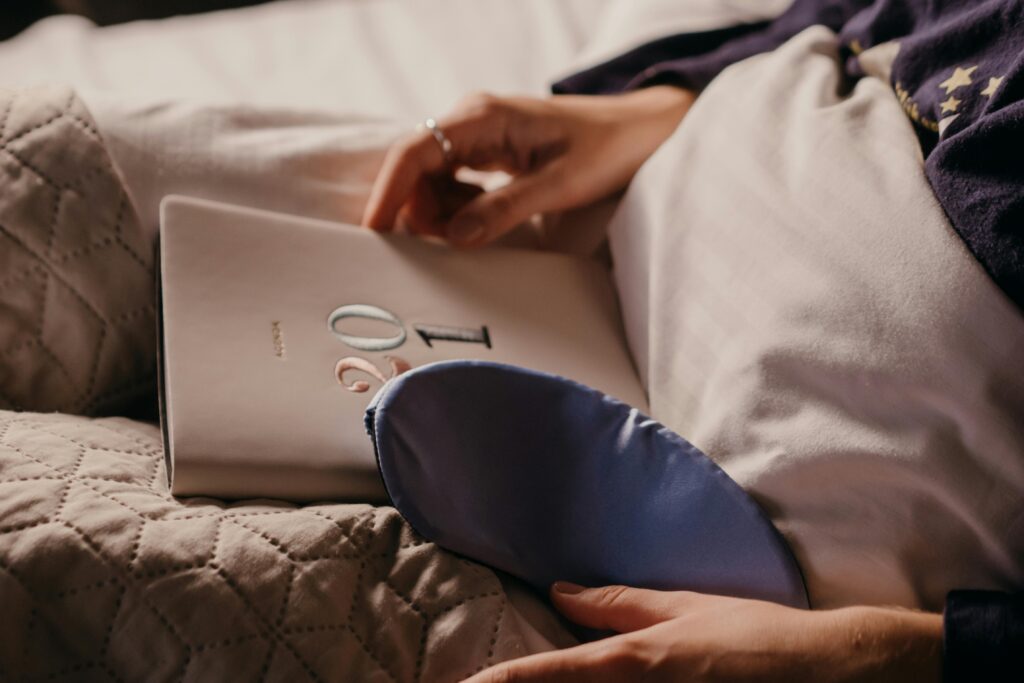
- place a comforting item in your lap
Think of this space as:
your portable sanctuary.
The First Hour Protocol: Settling Into Safety
The first hour is usually the most difficult for trauma-sensitive travelers.
Once you settle, your nervous system often stabilizes. you now already have the tools to handle any surges of anxiety from part 4 real-time regulation techniques
During the first hour:
- stay hydrated
- avoid caffeine
- engage grounding touch
- practice slow exhale breathing
- avoid scrolling social media (overstimulating)
- choose calming sounds
- let your body settle before interacting or eating
- A gentle, engaging activity like a simple puzzle game, adult coloring on a tablet, or listening to a familiar, comforting audiobook would help .
Your only job is to arrive in your body, one gentle moment at a time.
This is the moment your healing deepens.
You made it through:
- the crowds
- the noise
- the uncertainty
- the triggers
- the jet bridge
You crossed the threshold—not just to the aircraft, but to a new chapter in your nervous system’s story.
Every moment of regulation during boarding is trauma rewiring itself into resilience.
And now, you are ready for the final phase of this journey.
PART 6: Arrival & Integration in Turkey
Your body may be tired, but your resilience is arriving with you.
Touching down in Türkiye whether in Istanbul, Ankara, Izmir, or a smaller regional airport is not just the end of a flight.
For trauma survivors, it is the beginning of nervous system re-entry.
Airports can trigger activation, but arrival often triggers a different psychological response:
- relief
- sensory shock
- disorientation
- emotional release
- excitement mixed with overwhelm
- zoning out or dissociation
- sudden fatigue
Your goal is not to “push through.”
Your goal is to transition gently and land not only in Turkey, but in your body.
Istanbul Airport Arrival Strategy
Istanbul Airport (IST) is one of the largest in the world bright, busy, and architecturally open.
This can feel breathtaking or overwhelming depending on your state.
That’s why your arrival begins with the 30-Minute Pause Protocol.
The “30-Minute Pause” Protocol
Before joining any lines or making decisions:
- Find a quiet cornern near gates, near a restroom hallway, or next to a column.
- Sit down or lean against a wall.
- Breathe slowly to stabilize your heart rate.
- Have a sip of water hydration grounds the body.
- Use a grounding object for 1–2 minutes.
- Orient to your surroundings:
- notice signs
- observe lighting
- find your path to passport control
- Do not rush.
The plane has arrived. You have time.
This pause signals to your body:
“You’re safe enough. We’re moving at our own pace.”

Pre-Arranged Transportation to Reduce Decision Fatigue
After you leave security, the last thing a trauma-sensitive nervous system needs is:
- negotiating prices
- unpredictable taxis
- figuring out public transportation
- sensory overload in busy arrival halls
This is why pre-booked transport is a life-changing strategy.
Best options at IST:
- Private transfer services (HAVAIST, KiwiTaxi, Transfer2Airport)
- Hotel-arranged pick-ups
- Airport shuttles (from major districts)
- Pre-booked taxi via the Istanbul Airport Taxi app
Knowing that someone is waiting for you outside eliminates uncertainty, which is one of the biggest trauma triggers.

First Sensory Impressions: A Grounding Ritual Through Turkish Tea
As you enter Türkiye, allow your nervous system to meet the country softly.
letting Turkish hospitality (misafirperverlik) care for you. Turkish airports often have small cafés near baggage claim or exits where you can order:
- çay (Turkish tea)
- ıhlamur (linden tea)
- adaçayı (sage tea)
The ritual of tea warm cup in hand, slow breathing, gentle aroma is psychologically grounding.
In trauma therapy, this is called sensory anchoring.
Let this be your moment of arrival. Find transformative retreats that support anxiety healing, balance, and overall well-being. click here
Customs & Immigration Preparation
Immigration halls can look intimidating, but they typically move quickly in Türkiye.
Still, for anxious travelers, this area can trigger:
- fear of authority
- long lines
- unfamiliar procedures
- pressure to respond clearly
Here’s how to make it smoother.
Visual Guides to the Arrival Process Before your trip, study simple flow diagrams of the arrival steps:
- Passport control
- Baggage claim
- Customs
- Exit hall
- Transportation pickup
Familiarity lowers the brain’s threat response.
Printed Documents to Minimize Conversation
Have a small folder with:
- passport
- hotel address
- return ticket
- travel insurance
- reservation confirmations
You can slide your printed itinerary forward instead of speaking when overwhelmed.
Emergency Phrases for Overwhelm at Border Control
If your voice freezes or your anxiety spikes, these simple Turkish phrases help:
“Kusura bakmayın, biraz gerginim.”
Sorry, I’m a bit anxious.
“Daha yavaş konuşabilir misiniz?”
Could you speak more slowly?
“Belgelerim burada.”
My documents are here.
Border officers in Turkey are generally efficient and polite; they simply check your documents and wave you through.
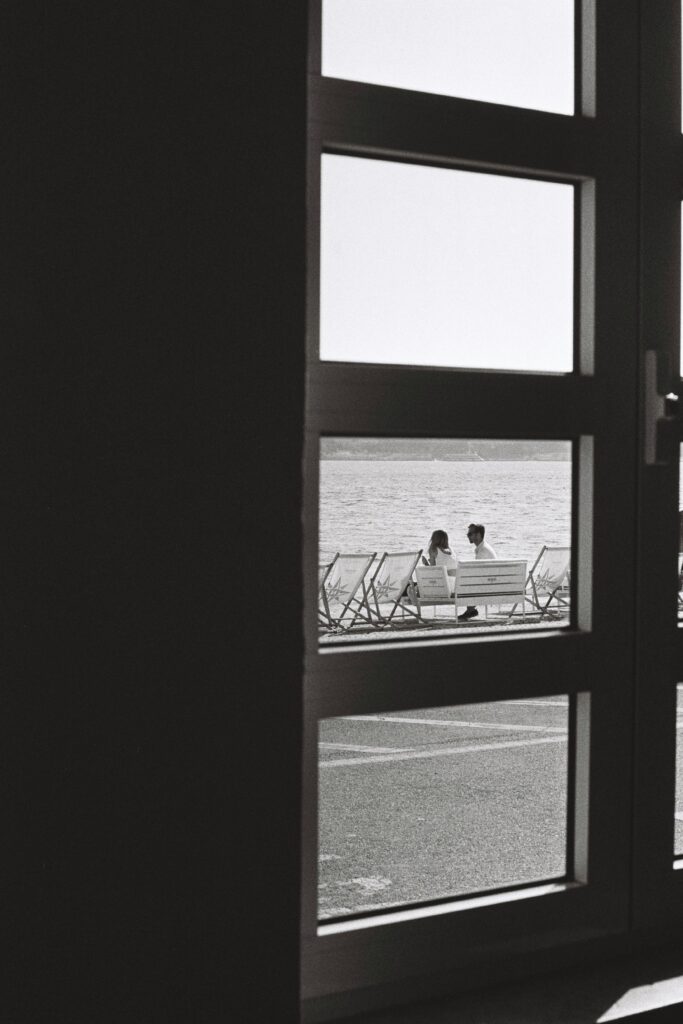
Integrating Your Arrival: Not Just Arriving in Turkey, But Arriving in Yourself
Once you step outside the airport, pause again.
Notice the air.
Notice the sounds.
Notice the feeling of having made it.
You did something your nervous system thought was dangerous
and you did it safely, wisely, and compassionately.
This moment deserves recognition.
Your Airport Transformation Awaits: From Trigger to Triumph
You didn’t just survive the airport.
You:
- prepared your body
- supported your nervous system
- navigated sensory overload
- regulated in high-stress zones
- advocated for yourself
- used trauma-informed tools
- crossed thresholds that once felt impossible
The airport wasn’t just a place you endured it became a sacred initiation point in your healing journey.
Every step you took from packing your calm container to boarding the plane to arriving in Türkiye rewired your nervous system for safety, resilience, and expansion.
And now?
The rest of your journey is yours to claim.